About Romila Chitturi
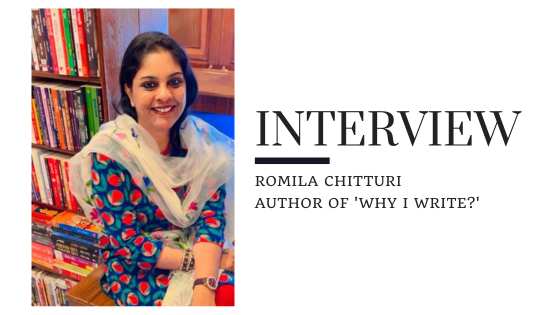
Romila Chitturi is an award-winning, bestselling author with 27 acclaimed books to her name. Recognized in India’s 100 Under 40 (2021), she stands out as a multifaceted voice in contemporary Indian literature. Beyond her work as an author and poet, Romila serves as a professor of practice, manuscript consultant, and a mentor to emerging writers. She is currently Content Director and Chief Editor at a Global Education company in Hyderabad, while also managing her own independent literary magazine. Romila is currently advancing her knowledge through Harvard University’s Literature program. Based in Hyderabad, India, she spends her days breathing life into words and helping other storytellers find theirs.
LiFT: Tell us about your book, the journey of writing it, and its content.
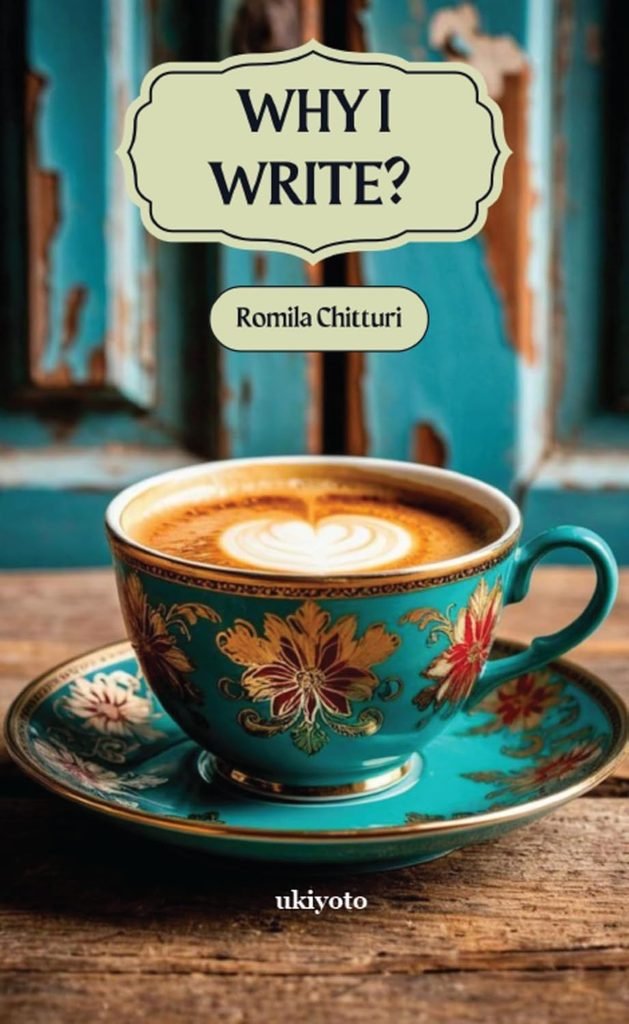
Romila Chitturi: Why I Write is one of my most personal books because it brings together my journey as a writer and the many ways writing has shaped my life. I began writing almost by accident, through school essays and newspaper columns, never imagining that words would become such an integral part of who I am. Over the years, writing has been my refuge, a way to understand my emotions, make sense of experiences, and connect with people. The book explores my beginnings, creative struggles, the fear of the blank page, finding my voice, overcoming perfectionism, and understanding the purpose of writing. As the manuscript evolved, I realised that my story was only one part of a much larger conversation. I therefore brought together 25 writers, each sharing a distinct perspective on why they write. The result is both a personal reflection and a collective exploration of the experiences, emotions, and connections that bring us back to the page.
LiFT: Why did you choose this title?
Romila Chitturi: I chose the title Why I Write because it captures the question that has followed me throughout my writing journey. Even after years of writing, publishing books, and working with other writers, I find that my reasons for writing continue to evolve. Sometimes, I write to understand myself. At other times, I write to process an emotion, preserve a memory, explore an idea, or help someone feel less alone.
As I worked on this book, I realised that there is no single answer to why we write. Every writer has a different beginning, a different relationship with words, and a different story to tell. Bringing together 25 writers made this even clearer to me. The title is therefore both personal and collective. It reflects my own search for meaning through words while inviting readers to discover what writing means to others. Ultimately, Why I Write is a question I continue to ask myself, and one I hope will inspire every reader to reflect on their own reasons for writing.
LiFT: When did you realize that you wanted to be a writer, and what was your inspiration behind it?
Romila Chitturi: I never had a defining moment when I decided to become a writer. Writing found me almost by accident. As a schoolgirl in 1996, I participated in an inter-school Hindi essay competition because a teacher encouraged me to try. Winning that competition opened a door I hadn’t known existed. Soon, I began writing a newspaper column, Food for Thought, and discovered the joy of putting my thoughts into words and sharing them with readers. My earliest inspiration, however, was my love for reading. I spent hours in school libraries, drawn to books and the worlds they opened up. Ruskin Bond particularly influenced me with his beautiful descriptions of nature and his ability to make ordinary moments feel extraordinary. I wanted to capture that same sense of wonder in my own writing. Over time, writing became more than a creative pursuit. It became a way to understand myself, process emotions, and connect with others. I have learned that inspiration can come from a book, a conversation, a difficult experience, or a fleeting observation. I may have started writing by accident, but continuing to write has been a conscious choice I have made throughout my life.
LiFT: Where do you see yourself ten years down the line in the world of literature?
Romila Chitturi: Ten years down the line, I hope to still be writing, reading, editing, and discovering new ways to tell stories. I have learned that literature is not a destination where you finally arrive. It is a journey that keeps changing you, often in ways you do not anticipate. I would love to write more books that reflect my experiences, questions, and observations of the world around me. I also hope to continue creating spaces where other writers can share their voices. Bringing twenty-five writers together in Why I Write reminded me that every writer has a different reason for putting words on paper, and that there is so much to learn when we listen to one another. For me, literature has never been only about my own writing. It is also about the community we build around stories. More than awards, recognition, or numbers, I hope that something I write stays with a reader. If, ten years from now, someone tells me that one of my books helped them understand themselves a little better or made them feel less alone, I would consider that a meaningful achievement. I cannot predict exactly where my literary journey will take me, but I hope I will always have the curiosity to keep writing and the humility to keep learning.
LiFT: How important do you think marketing and the quality of a book are in promoting it and increasing its readership?
Romila Chitturi: I believe the quality of a book and its marketing are equally important, but they serve different purposes. Quality gives readers a reason to stay, while marketing gives them a reason to discover the book in the first place. Even a beautifully written book can go unnoticed if it does not reach the right audience. At the same time, no amount of promotion can sustain a book if its content fails to connect with readers. As an author I have seen how important visibility, reader engagement, and word-of-mouth recommendations are in building a literary community. Marketing is not simply about selling copies. It is about communicating what makes a book worth reading, finding the audience that will appreciate it, and creating conversations around its ideas. I also believe that authors need to be patient. Readership often grows gradually through reviews, personal recommendations, literary events, and consistent engagement with readers. A strong book supported by thoughtful, sustained marketing has the best chance of finding its audience. Ultimately, marketing may bring a reader to the first page, but the quality of the writing is what makes them turn to the last one and recommend the book to someone else.
LiFT: What message do you want to convey to people through your writing?
Romila Chitturi: Through my writing, I want people to feel seen, understood, and a little less alone. I believe words have the power to give shape to emotions we struggle to express and help us make sense of experiences we do not always understand. Whether I am writing poetry, fiction, essays, or reflections on life, I hope my words leave readers with something they can carry with them. I write about human emotions, relationships, identity, resilience, and the small moments that often reveal the most about us. I do not believe every piece of writing needs to offer a solution or a moral. Sometimes, it is enough to make someone pause, question an assumption, recognise themselves in a character, or see another person’s perspective with greater empathy. My greatest satisfaction comes when a reader tells me that something I wrote resonated with them or helped them understand their own feelings better. I want my writing to remind people that their stories matter. We may experience the world differently, but through words, we can find common ground, build connections, and understand one another a little better.
LiFT: What activities do you resort to when you face writer’s block?
Romila Chitturi: When I face writer’s block, I try not to force myself to write. Over the years, I have learned that stepping away from the page can sometimes be more productive than staring at it for hours. Reading is my first instinct. A good book, an interesting sentence, or a fresh perspective can often get my thoughts moving again. I enjoy observing people and everyday situations. Sometimes, a conversation over coffee or a small moment during the day gives me an idea I want to explore. I often jot down random thoughts in my diary, even when they seem incomplete, because I never know which one might eventually become a poem, an essay, or a story. Music, silence, and a little time to myself also help me reconnect with my thoughts. And when nothing seems to work, I give myself permission to take a break. I have learned that not every pause is unproductive. Sometimes, the mind needs time to process what it has absorbed before it can create something new. I remind myself that writing is a practice, not a performance. I do not have to produce something brilliant every time I sit down. Sometimes, all I need to do is begin with one sentence and let the rest follow.
LiFT: What are your suggestions for budding writers and poets to help them improve their writing skills?
Romila Chitturi: Having been a writer for many years, I would tell budding writers and poets to stop waiting for the perfect moment, the perfect idea, or the perfect sentence. My own journey began quite unexpectedly with a Hindi essay competition in school. I never set out to become a writer, but one opportunity led to another, eventually opening doors I had never imagined. Sometimes, you discover your calling simply by giving something a chance. Read widely, but do not try to sound like your favourite author. Ruskin Bond influenced my love for writing, particularly his descriptions of nature, but over time, I learned that the goal was not to write like him. It was to discover what I could bring to the page that was uniquely mine. Write regularly, even when you think you have nothing important to say. Keep a diary, observe people, listen to conversations, and pay attention to the little things around you. Some of my most meaningful ideas have come from ordinary moments and emotions I needed to understand better. Learn to edit your work and accept feedback without taking every criticism personally. Your first draft is allowed to be imperfect. Above all, do not measure your journey against someone else’s milestones. There have been phases when writing came easily and periods when life pulled me away from it. Yet I always found my way back to the page. Give yourself that same patience. Write because something within you needs expression, and remember that your voice does not have to be the loudest to matter. It simply has to be honest enough to reach someone.
Click here to order Romila Chitturi’s Book – Why I Write?