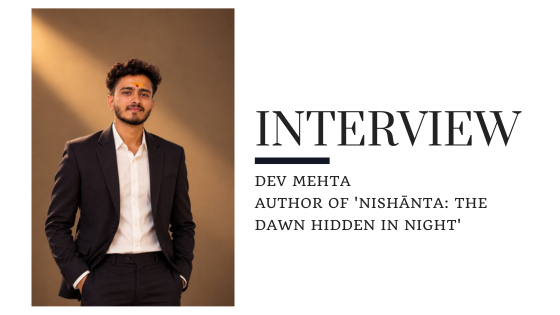
About Dev Mehta
Dev Mehta is a psychology student at Parul University, Vadodara, an author, and a seeker exploring the intersection of modern psychology and ancient Indian wisdom. He is the author of Nishānta: The Dawn Hidden in Night, a spiritual-psychological work that blends psychological insights with the timeless wisdom of the Bhagavad Gita, Indian philosophy, and yogic traditions. Through his writing, he seeks to make ancient wisdom relevant to contemporary struggles of the human mind, emotions, identity, and inner well-being. He also contributes weekly articles to Gujarati newspapers, exploring themes of psychology, spirituality, self-discovery, and personal growth. His work reflects a deeper aspiration: to bridge the scientific understanding of the mind with the experiential wisdom of the self, inspiring individuals to look beyond their suffering and discover the light within.
LiFT: Tell us about your book, the journey of writing it, and its content.
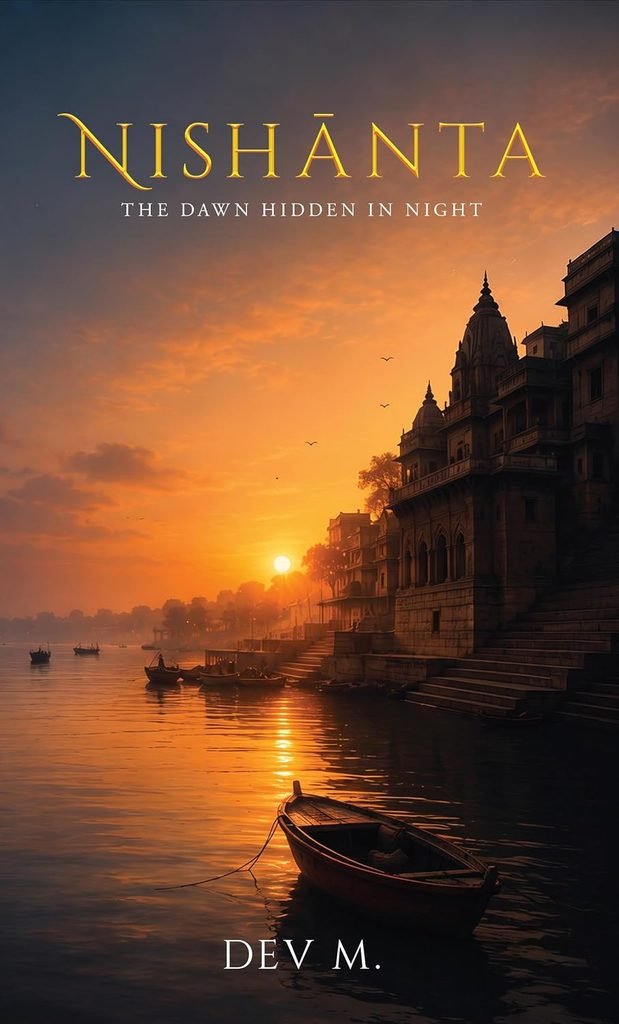
Dev Mehta: Nishānta: The Dawn Hidden in Night is a spiritual-psychological novel that brings together modern psychology and the timeless wisdom of ancient Indian spiritual traditions. Conceived as a kind of modern-day Gita, the book explores the complexities of the human mind, the nature of suffering, and the possibility of inner transformation through a dialogue between psychological understanding and spiritual inquiry.
The story follows Arjuna Pandey, an eighteen-year-old navigating addiction, emotional turmoil, and questions about identity, meaning, and existence. Through his struggles and therapeutic encounters, the narrative explores themes such as the ego, attachment, fear, emotional suffering, self-awareness, and healing. Drawing inspiration from the Bhagavad Gita, the Upanishads, and yogic philosophy, the book attempts to connect ancient insights about the self with contemporary understandings of human behaviour and mental well-being.
At its heart, Nishānta asks an important question: Can understanding the mind help us heal, and can understanding ourselves help us move beyond the suffering that the mind creates? Rather than treating psychology and spirituality as separate or opposing disciplines, the book explores how they can complement one another. Psychology offers ways to understand thoughts, emotions, behavioural patterns, and psychological distress, while Indian spiritual wisdom invites us to examine our attachments, conditioning, sense of identity, and relationship with our inner self.
The book does not present spirituality as an escape from life’s difficulties. Instead, it explores the possibility of meeting those difficulties with greater awareness and understanding. It aims to make ancient Indian wisdom accessible to contemporary readers, particularly young people navigating emotional confusion, personal struggles, and the search for meaning in an increasingly demanding world.
The journey of writing Nishānta was far from linear. It was filled with ups and downs, creative blocks, interruptions, moments of uncertainty, and periods when the words seemed to flow effortlessly. There were days when writing felt difficult and I struggled to maintain the rhythm, while on other days, ideas emerged with a clarity I could not have deliberately produced.
Throughout this journey, I tried to put into the book whatever I had learned, experienced, questioned, and understood about psychology, spirituality, human behaviour, and existence. As a psychology student and spiritual seeker, I approached the manuscript not as someone who had found all the answers, but as someone sincerely exploring the questions that make us human. I drew upon my learning in psychology, my engagement with Indian philosophical traditions, and my own reflections on the relationship between the mind and the self.
Some of the most memorable moments came when I stopped consciously trying to write. There were days when I would sit down and enter a deeply immersed state, writing fluently without overthinking, planning every sentence, or searching deliberately for the right words. Thoughts seemed to flow naturally, almost as though I were simply receiving them and giving them expression. I cannot fully explain those moments, but they remain among the most meaningful parts of the creative process. They taught me that writing is not always about forcing words onto a page; sometimes, it is about becoming quiet enough to allow them to emerge.
There were also periods when the flow broke, when the manuscript seemed to demand more than I could immediately give, and when I had to return to it with patience. The process taught me that creativity does not always follow a schedule. A book is not written only during moments of inspiration; it is also built through the willingness to return after every pause, to continue despite uncertainty, and to remain faithful to an idea even when its expression feels difficult.
Writing Nishānta was also a journey of learning. My understanding of psychology and spirituality continued to evolve while I was writing, and the manuscript grew alongside me. I was conscious that I was still young and that my own journey of understanding had only begun. Yet, I wanted to contribute whatever I could at this stage of my life, bringing together the knowledge I had acquired and the questions that continued to shape me.
For me, the process became more than the act of completing a manuscript. It became an exploration of how knowledge, experience, reflection, and creativity can come together to express something meaningful. The book carries my present understanding, but it also reflects my willingness to remain a student of life.
LiFT: Why did you choose this title?
Dev Mehta: I chose the title Nishānta: The Dawn Hidden in Night because it represents the central message of the book. The word Nishānta signifies the end of night and the arrival of dawn. For me, it beautifully captures the idea that even in our darkest moments, the possibility of a new beginning always exists.
The night symbolises our struggles, suffering, confusion, and inner conflicts, while the dawn represents awareness, understanding, and transformation. The essence of the book is that we do not have to remain prisoners of our darkness; through understanding the mind and exploring the deeper dimensions of our existence, we can begin to find our way towards the light.
I believe that sometimes, the dawn we seek outside is waiting to be discovered within us. That is what Nishānta stands for—not merely the end of darkness, but the beginning of seeing ourselves differently. And that is why the subtitle is The Dawn Hidden in Night: because sometimes, the light we are searching for is already present within the darkness we are trying to escape.
LiFT: When did you realize that you wanted to be a writer, and what was your inspiration behind it?
Dev Mehta: Honestly, I never imagined that I would become a writer or a poet. It was never a planned ambition or something I consciously pursued. In 2023, I simply began writing a little in Gujarati, and somehow, it never stopped. What started as a small expression gradually became an inseparable part of my life, eventually leading me to write Nishānta: The Dawn Hidden in Night.
If you ask me what inspired me to begin writing, I honestly do not have a definite answer. I cannot point to one person, one moment, or one experience and say that this was the reason. I believe it was grace. Perhaps some things are not planned or pursued; they unfold naturally when the time is right.
Over time, writing became a way for me to express what I was learning, observing, questioning, and discovering about life, psychology, and spirituality. I never began with the intention of becoming an author. I simply kept writing, and one day, I realised that the little words I had started putting on paper had grown into something much bigger than I had imagined.
Today, I see writing less as a destination I chose and more as a journey I somehow found myself on. I am grateful for it, and I do not know where it will lead me next. Perhaps that is the beauty of it: I did not set out to become a writer; I simply followed what came to me, and I believe grace took care of the rest.
LiFT: Where do you see yourself ten years down the line in the world of literature?
Dev Mehta: Honestly, I have no idea where I see myself ten years from now, and I think there is a certain freedom in not knowing. I have never looked at writing as a race to produce more books or build a name for myself in the world of literature. I simply write when something within me finds its expression.
There is, however, one dream I hold close to my heart: to publish a textbook, particularly in the field of psychology, perhaps one that brings modern psychological understanding and the wisdom of Indian traditions together. If that happens, I would feel that I have contributed something meaningful to the world of learning.
And who knows, perhaps that textbook will be my last publication. I say this not because I want to stop writing, but because I do not wish to measure my life by the number of books I publish. If one book can genuinely make a difference, perhaps that is enough.
I have no fixed destination in literature. I would rather give my attention to what I am doing today than spend my life worrying about where I must arrive tomorrow. After all, life is not about reaching some distant point; it is about how deeply you experience the journey.
If something needs to be written through me, I will write. If not, I am perfectly willing to remain silent.
LiFT: How important do you think marketing and the quality of a book are in promoting it and increasing its readership?
Dev Mehta: I believe marketing plays an extremely important role in a book’s success. You may write something truly meaningful, but if it never reaches the right audience, its impact remains limited. In today’s world, writing a good book is only half the journey; ensuring that people discover it is equally important.
However, I would distinguish between a book’s commercial success and its literary value. Marketing can bring a book to thousands of readers, but it cannot guarantee that the book will genuinely touch them. That depends on the quality of the writing, the depth of its ideas, and the connection it creates with its readers.
I believe a book needs both substance and visibility. Quality gives people a reason to value a book, while marketing gives them an opportunity to discover it. One without the other can limit its reach.
Ultimately, marketing may determine how many people discover a book, but the quality of the book determines what they take away from it. As an author, I believe our responsibility does not end when we finish writing; we must also make a sincere effort to ensure that our work reaches the people for whom it was written.
LiFT: What message do you want to convey to people through your writing?
Dev Mehta: The message I want to convey through my writing is simple: If I can do it, you can do it too.
I am not writing as someone who has figured out life or found answers to every question. I am simply a young person trying to understand life, learning along the way, and sharing whatever I have come to understand through psychology, spirituality, and my own journey.
I want people to know that they do not have to be extraordinary to begin something meaningful. You do not need to have all the answers, nor do you need to have your entire life figured out. You simply need the willingness to begin, the patience to continue, and the courage to keep going when things become difficult.
Through Nishānta, I hope readers discover that their struggles do not define the entirety of who they are, that understanding themselves can change the way they experience life, and that the wisdom we seek is not always as distant as we imagine.
If a young reader picks up my book and feels that someone like them, who is still learning and growing, could create something meaningful, perhaps they will find the courage to pursue their own dreams.
I do not want my writing to make people believe in me as an author. I want it to help them believe in themselves.
If my journey can inspire even one person to begin theirs, I believe my writing has served its purpose.
LiFT: What do you do apart from writing?
Dev Mehta: Apart from writing, I am pursuing a BA (Honours) in Psychology at Parul University, Vadodara. My interest lies in understanding the human mind, human behaviour, and the deeper questions of human existence. Alongside psychology, I am deeply drawn to spirituality, yogic traditions, and ancient Indian wisdom.
I also write weekly articles for Gujarati newspapers, exploring themes related to psychology, spirituality, and life. Beyond academics and writing, I spend time learning, practising sadhana, and exploring the connection between the mind and the self.
In many ways, these interests are interconnected. Psychology helps me understand the mind, spirituality encourages me to look beyond it, and writing gives me a way to express what I discover along the journey.
LiFT: What activities do you resort to when you face writer’s block?
Dev Mehta: Whenever I face writer’s block, I usually turn towards devotional songs, chants, and meditation. I believe that not every silence needs to be filled with words; sometimes, it needs to be experienced.
Listening to devotional music and chanting helps me settle my mind, while meditation allows me to step away from the constant need to think, create, or produce something. I simply sit with myself and allow things to be as they are.
I do not always try to force inspiration to return. I believe creativity has its own rhythm, and sometimes, the best thing a writer can do is to stop writing for a while and simply live.
After all, you cannot force a river to flow; you can only remove the obstacles and allow it to find its way. In the same way, I try to create an inner space where words can arise naturally, rather than chase them when they are not ready to come.
LiFT: What if your story were to be adapted into a movie? Who would you want to work as the director or actors in it?
Dev Mehta: If Nishānta were adapted into a movie, I would love Imtiaz Ali to direct it. His ability to explore love, identity, human emotions, and self-discovery aligns beautifully with the soul of the book. I would want the film to be less about telling a story and more about taking the audience on an inward journey.
LiFT: Are you working on your next book? If so, could you tell us something about it?
Dev Mehta: Yes, I am working on my next book, but I would like to keep most of its details under wraps for now. What I can share is that it explores femininity, womanhood, and motherhood. In many ways, it is my tribute to women, to the feminine experience, and especially to mothers.
LiFT: What are your suggestions for budding writers and poets to help them improve their writing skills?
Dev Mehta: My only suggestion would be to read deeply, write honestly, and never write merely to impress. Observe life, question things, and allow yourself to write even when you feel you are not good enough. Do not rush to become an author; focus on becoming a better observer of life. Remember, you do not need to have extraordinary experiences to write something meaningful. Sometimes, an ordinary experience understood deeply becomes extraordinary writing.
Click here to order Dev Mehta’s Book – Nishanta