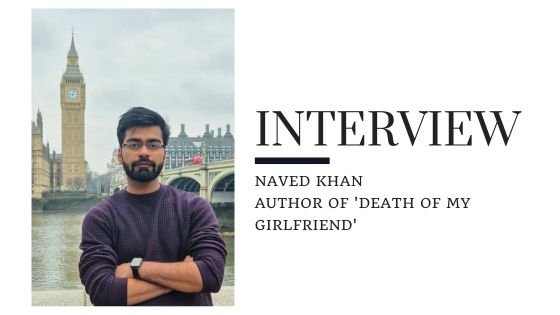
About Naved Khan
Naved Iqbal Khan completed his studies in the United Kingdom, with an academic background in Communication, Media, and Data Analytics. Professionally, he has experience in student recruitment, marketing, and data quality.
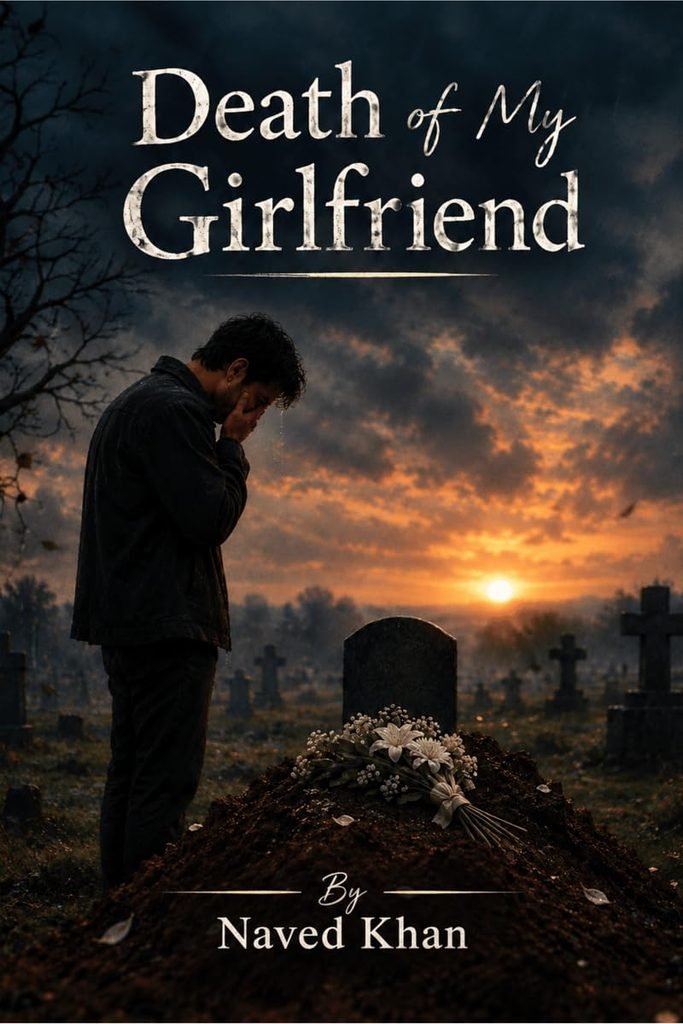
Writing is not his profession, but something he turned to when he felt compelled to share a story that held personal significance for him. Death of My Girlfriend grew out of that connection, bringing together multiple real-life incidents into a continuous narrative about love, loss, grief, and the unanswered questions that life sometimes leaves behind.
For Naved, the book is less about being a writer and more about giving a meaningful story the space to be told.
LiFT: Tell us about your book, the journey of writing it, and its content.
Naved Khan: Death of My Girlfriend is a story that holds a special place in my heart. It draws inspiration from multiple real-life incidents and experiences that I brought together to form one continuous narrative. The book explores love, loss, grief, unanswered questions, and the emotional weight of things left unsaid.
The journey of writing it was quite personal. I never set out to become a writer or planned to write a book. It began with a story that stayed with me, one that I felt deserved to be told. As I started putting my thoughts into words, I realised that writing could be a way of exploring emotions and experiences that are often difficult to express in everyday conversations.
At its heart, the book is about the search for closure, especially when you never get the answers you need. Sometimes, we spend so much time trying to understand why something happened or why someone left that we forget we may never find the explanation we are looking for. The book explores the difficult process of accepting that uncertainty, making peace with unanswered questions, and learning to move forward without having all the pieces. For me, it is a story about understanding that closure does not always come from getting answers; sometimes, it comes from learning to live with the questions.
LiFT: Why did you choose this title?
Naved Khan: Honestly, I don’t think there was one particular reason I chose the title Death of My Girlfriend. When I first started writing the book, I had a different plan. I wanted to keep her absence as a twist and reveal it midway through the story. But when I revisited the idea, I realised that the loss wasn’t just a plot twist; it was the heart of the entire story.
I felt that revealing it from the beginning would allow readers to connect more deeply with the emotions, the memories, and the journey that follows. I wanted them to focus not just on what happened, but on how someone deals with a loss, searches for answers, and tries to find closure when it never really comes. In the end, the title became more than just a name. It represented the emotion around which the entire story was built.
LiFT: When did you realize that you wanted to be a writer, and what was your inspiration behind it?
Naved Khan: I wouldn’t say there was ever a moment when I decided I wanted to become a writer or poet, because even today, I don’t see writing as a career. It’s something I turn to when there are stories, experiences, or emotions that I feel deserve to be shared. Sometimes, certain things stay with you, and you feel that putting them into words might help someone else understand what they’re going through. My inspiration comes from these experiences and the possibility that someone, somewhere, might find a part of their own story in mine. If sharing these stories helps even a few people feel understood, look at things differently, or find some peace with their own unanswered questions, then I feel I’ve made an impact. For me, it’s not about becoming a writer; it’s about sharing stories that I believe are worth telling.
LiFT: Where do you see yourself ten years down the line in the world of literature?
Naved Khan: Honestly, I don’t have a fixed vision of where I want to be in the literary world ten years from now. I don’t see writing as a career that I need to build, but there are so many stories and experiences that I still want to share with the world. If, ten years down the line, I am able to bring those stories to life and help more people relate to them, reflect on their own experiences, or feel understood, I would consider that a meaningful journey. I hope to keep writing whenever I come across a story that feels worth telling. More than recognition or success, I would want my words to leave an impact, even if it’s on just one person at a time.
LiFT: How important do you think marketing and the quality of a book are in promoting it and increasing its readership?
Naved Khan: I think both marketing and the quality of a book are equally important, but they serve different purposes. Marketing helps a book reach people who might never have discovered it otherwise. No matter how meaningful a story is, it cannot connect with readers if they don’t know it exists. At the same time, marketing can bring readers to a book, but the quality of the writing and the story is what makes them stay, connect with it, and recommend it to others.
For me, marketing is about creating that first connection, while the book itself has to build a lasting one. Especially today, when readers have so many options, presenting a book in a way that captures their attention is important. But I also believe that a story with genuine emotion and something meaningful to say has the potential to find its audience. Ultimately, the real success of a book isn’t just how many people pick it up, but how many carry something from it long after they’ve finished reading.
LiFT: What message do you want to convey to people through your writing?
Naved Khan: I want my writing to make people think, feel, and look at things from different perspectives. I believe everyone has stories and experiences worth sharing, and sometimes, putting them into words can help others see things they might not have considered before. If my writing can make someone reflect, relate, or see the world a little differently, I think that is meaningful in itself.
LiFT: What do you do apart from writing?
Naved Khan: Apart from writing, I enjoy exploring new places, meeting people, and learning about different perspectives and cultures. I also like observing the world around me and spending time on things that spark my curiosity.
LiFT: What activities do you resort to when you face writer’s block?
Naved Khan: Most of my ideas come from real-life experiences, so I usually already know the story I want to tell and the structure I want to follow. The challenge is sometimes finding the right words or expressing a thought in the most impactful way. When that happens, I don’t force myself to write. I take a break, relax, and do something else. Often, while I’m occupied with something different, my mind subconsciously keeps working on the thought, and an expression or a better way of putting it suddenly comes to me. Whenever that happens, I quickly note it down on my phone so I don’t forget it when I return to my desk. That’s what works for me: giving my mind the space to find the words naturally.
LiFT: What if your story were to be adapted into a movie? Who would you want to work as the director or actors in it?
Naved Khan: If my book were adapted into a movie, Imtiaz Ali would be one of my first choices as a director. I really admire his style of storytelling and the way he explores human emotions, relationships, and the complexities of people. I also think Shoojit Sircar, who directed October, would be a great choice because of the sensitivity and depth he brings to his films. As for the lead actors, I haven’t settled on anyone yet. I’d want to find actors who could genuinely capture the emotions and subtlety of the characters rather than simply fit a particular image.
LiFT: Are you working on your next book? If so, could you tell us something about it?
Naved Khan: Yes, I’m currently working on my next book, titled The House That Haunted Us. Unlike my previous book, this one takes me back to my childhood and some unsettling experiences my family and I had in our home. The story revolves around what we experienced as paranormal activities, along with local accounts of ghosts and what we call chudail. What makes this story particularly personal is that these aren’t stories I simply heard somewhere; they are experiences I remember from my own childhood, shared by people around me as well. Even today, the house carries a sense of mystery for me. It’s a story I’ve wanted to share for a long time, and I hope to bring those experiences to life through this book.
LiFT: What are your suggestions for budding writers and poets to help them improve their writing skills?
Naved Khan: My advice to budding writers and poets would be to write about things they genuinely feel connected to. Don’t focus too much on using complicated words or trying to sound like a writer. Focus on what you want to say and how honestly you can express it. Read widely, observe the world around you, and don’t be afraid to rewrite your work until it reflects what you truly mean. Most importantly, don’t rush the process or compare your journey with someone else’s. I believe good writing isn’t just about finding the right words; it’s about having something meaningful to say and finding a way to make others feel it too.
Click here to order Naved Khan’s Book – Death of My Girlfriend