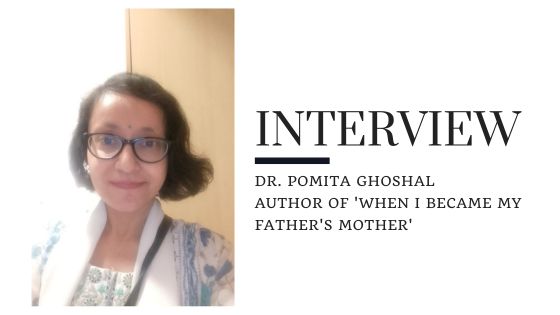
About Dr. Pomita Ghoshal
Dr. Pomita Ghoshal is currently an Assistant Professor of Physics in The LNMIIT, Jaipur. She was born and brought up in Lucknow and pursued her Ph.D. and post doctoral degrees in Allahabad, Mumbai, Trieste (Italy) and Ahmedabad.
Besides her own field, she is deeply interested in literature, psychology and the complexities of human nature. Reading, writing, music and movies nourish her. Sudoku is her guilty pleasure.
In her school and college days, she was extremely fold of writing stories and articles and excelled in English language and literature. She has published stories and articles in Target magazine and more recently on Medium (medium.com).
She has more than 20 published research papers and articles in Physics in international journals.
Recently she won the India Authors Academy Author Award (June 2026) and Sahitya Ratna Samman Award (Best Non-fiction Author (Memoir category), July 2026).
LiFT: Tell us about your book, the journey of writing it, and its content.
Dr. Pomita Ghoshal: A large part of me has been defined by my relationship with my father, who I lived with all my life. I lost my mother as a child and have no siblings or immediate family, so my father was my only anchor and the enduring love of my life.
I lost him last year at the ripe age of 97 after being his sole caregiver through a harrowing, memorable journey of dementia, aging and decline. The experience transformed me.
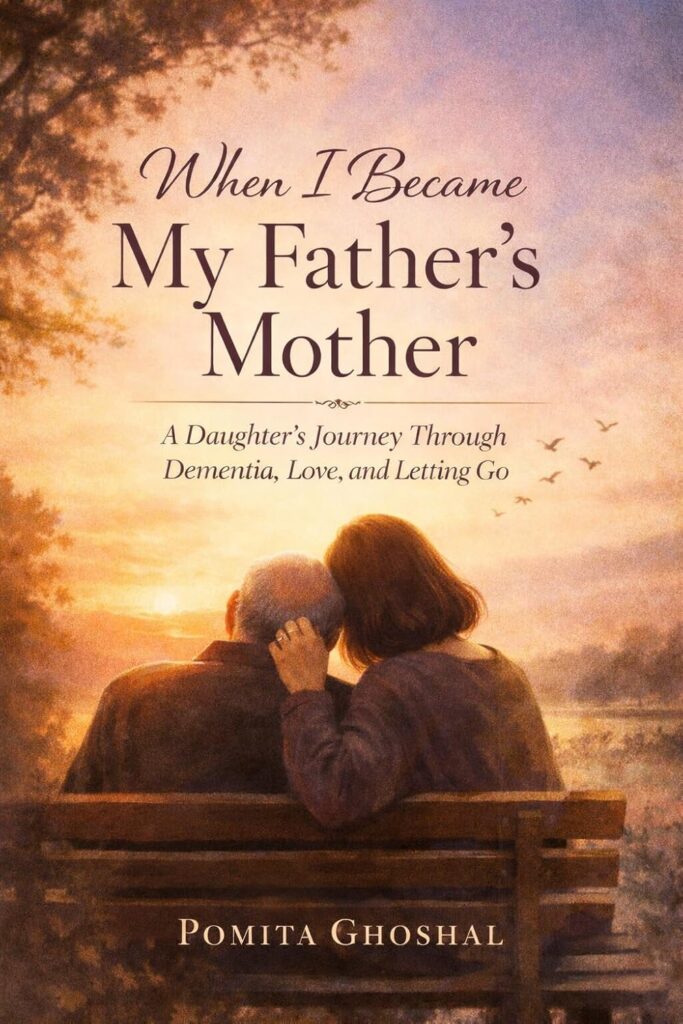
My book, ‘When I Became My Father’s Mother’, is born of those days and years of light and darkness and love and struggle and rainbows. I wrote it to release the pain and guilt inside me, and the learnings – and in the hope that it may help some others on similar paths to feel less alone.
My book captures the anxiety, despair and overwhelm that any human being feels when they are entrusted with the sole responsibility of caring for another person who is helpless. In that way, it goes beyond a father-daughter story to a more universal one – of very imperfect, very tentative grace under pressure. And when that thread of being someone’s lifeline is lost, the grief and regret and emotional vacuum that follows.
I found my way slowly and painstakingly out of this land of dreams and shadows. I learned to let go of the pain without letting go of the love. I would like to believe that my story can hold someone else’s hand on the same journey.
LiFT: Why did you choose this title?
Dr. Pomita Ghoshal: The title just came organically. There is a role reversal that happens in any parent-child relationship – a point at which the grown-up offspring realizes that the person they depended on, the rock of their life, now needs their support and supervision to survive. This realization is even more marked for parents with dementia, since the person slowly transforms into an innocent, unaware, sometimes irritating child.
A few years back, I used to tell friends that my father is now like my 5-year-old child – mischievous, hard to control, needing constant supervision to keep safe. A year before his death, I was telling them he’s like my 6-month-old child – helpless, totally dependent, needing full-time care. In that sense, the title was there inside the experience itself.
LiFT: When did you realize that you wanted to be a writer, and what was your inspiration behind it?
Dr. Pomita Ghoshal: I have been writing since my childhood. The nature of the creative output changed – first it was adventure stories modeled on the likes of Enid Blyton, in my teens it was reflective poetry which expressed adolescent angst, sometimes it was essays and articles on social issues. Then, for many years, I only journalled – writing was my private sanctuary to process my emotions and my questions, all that was unfinished inside me.
After losing my father, I realized that the private needed to become public. Because my story of love and loss and survival was not just mine… it could be my bridge to connect with the world and give succour to someone else.
LiFT: Where do you see yourself ten years down the line in the world of literature?
Dr. Pomita Ghoshal: I hope I will still be writing after ten years. Authorship is not my primary career – I am a Physics lecturer. But I am deeply drawn to psychology, literature and the architecture of the human mind and relationships. I feel like there is a deeper story waiting to be told, about my experience with my father and his parenting of me and my parenting of him. Somewhere down the line, I hope that I will be able to express that story, and that it will touch the hearts and lives of people as much as this book is doing.
More than success or recognition, if my writing can help someone feel less alone and helpless, I will feel like my purpose has been fulfilled.
LiFT: How important do you think marketing and the quality of a book are in promoting it and increasing its readership?
Dr. Pomita Ghoshal: As a first-time author, I started out with hardly any literary recognition or public presence. A gradual build-up of visibility helps greatly, in this situation, because if people don’t even know that your book exists, how will they read it? Promotions are important – through social media, through reviews and features, and through personal channels. But even more than that, I believe the book has to be worth reading. If even a few people truly connect with a story and feel personally moved by it, the word will go out. If that factor is not there no amount of marketing will help.
As a writer, our job is to ensure quality, and to make sure that readers get to know about the book and have access to it. Beyond that, we need to trust that if there is some magic and merit in it, it will find its place in the world.
LiFT: What message do you want to convey to people through your writing?
Dr. Pomita Ghoshal: I believe this book is not just for caregivers of aging parents but also for aging parents themselves! I do want the reader to take away one thing – that my relationship with my father was what it was because he built it to be that. His gentleness, tolerance, wisdom and good humor made him my friend, not just my father. The last few chapters happened the way they did because the first few chapters happened the way they did. So that caregiving became an act of love, not just an act of duty.
I have a special message for those who’re doing the dark, beautiful job of caregiving – have faith. Take care of yourself. Get help wherever possible – you can’t pour from an empty cup. And most of all, don’t be too hard on yourself for failing at times…. it’s a hard, hard journey, and whatever you’re doing is love.
LiFT: What do you do apart from writing?
Dr. Pomita Ghoshal: I am a lecturer in Physics in LNMIIT Jaipur. I’ve had a busy academic life, having completed my Ph.D. and some postdoctoral degrees before getting my current tenured position. I love both science and literature, but my secret interest is in psychology. The workings of the human mind fascinate me. Sudoku and Quordle are my guilty pleasures. I read a lot of books and watch a lot of movies – the deeper ones, on love and relationships and inner work, draw me most.
LiFT: What activities do you resort to when you face writer’s block?
Dr. Pomita Ghoshal: Walking! It’s the best cure for stress and depression as well as any kind of mental block. A brief sojourn in nature rejuvenates me and brings me back to myself, my thoughts and my energy. Sometimes sleeping on it also helps. The mind heals itself during sleep. Hidden patterns get resolved.
LiFT: What if your story were to be adapted into a movie? Who would you want to work as the director or actors in it?
Dr. Pomita Ghoshal: Shoojit Sircar would be a wonderful choice for directing a movie on a father-daughter relationship, caregiving and dementia. Remember Piku? It had so much resonance with my own life at that time. Who could play my father’s role? Tough call. I think Anupam Kher or Nasiruddin Shah would be great. I admired the latter so much in his recent outing in Main Vaapas Aaunga. An unconventional choice would be Aamir Khan… my father was so fond of him as an actor. He’s not age-appropriate, but I feel he would do justice to my father’s unconventional brilliance and the tragedy of his decline.
LiFT: Are you working on your next book? If so, could you tell us something about it?
Dr. Pomita Ghoshal: My next book is still in my mind, not out on paper. I have been thinking of the broader implications of my journey with my father – not just the sad last part of it, but the full spectrum of cause and effect. The relationship which my father so carefully built and nurtured, over the years, led not only to my devotion to him but also to my general outlook of openness, curiosity and understanding. I would like to explore, in my writing, how gentle, expansive parenting can generate a ripple effect in society, healing intolerance and building human bonds based on love instead of fear and strict rules and judgments.
LiFT: What are your suggestions for budding writers and poets to help them improve their writing skills?
Dr. Pomita Ghoshal: Read a lot. Read the classics, the greats of literature, contemporary bestsellers, genres which appeal to you and books which are out of your comfort zone. The skill of language and the turn of phrase come from feeling at home with it, especially if English is not your first language. Reading is not a popular art nowadays, but it is rewarding and essential for aspiring writers. You also have to keep practicing. Before writing for the world, write for yourself – journal, document your emotions and experiences and everyday observations which touch you. It will heal your wounds and make it easier to express yourself.
Click here to order Dr. Pomita Ghoshal’s Book – When I Became My Father’s Mother