About Tushar Chatterji
Born and brewed in the steel city of Jamshedpur, Tushar Chatterji grew up surrounded by grit, grace, and just the right dose of madness—the perfect ingredients for a storyteller in the making.
Having spent over 14 years navigating the corporate saga, he’s been balancing PowerPoints by day and plot points by night. Somewhere between quarterly meetings and movie reviews, he found his rhythm in storytelling.
A self-confessed coffee philosopher and mountain wanderer, Tushar believes every trail, trek, and tangled conversation hides a story worth telling—preferably with a dog or two by his side.
He’s always up for a chat—over chai, coffee, or curiosity.
LiFT: Tell us about your book, the journey of writing it, and its content.
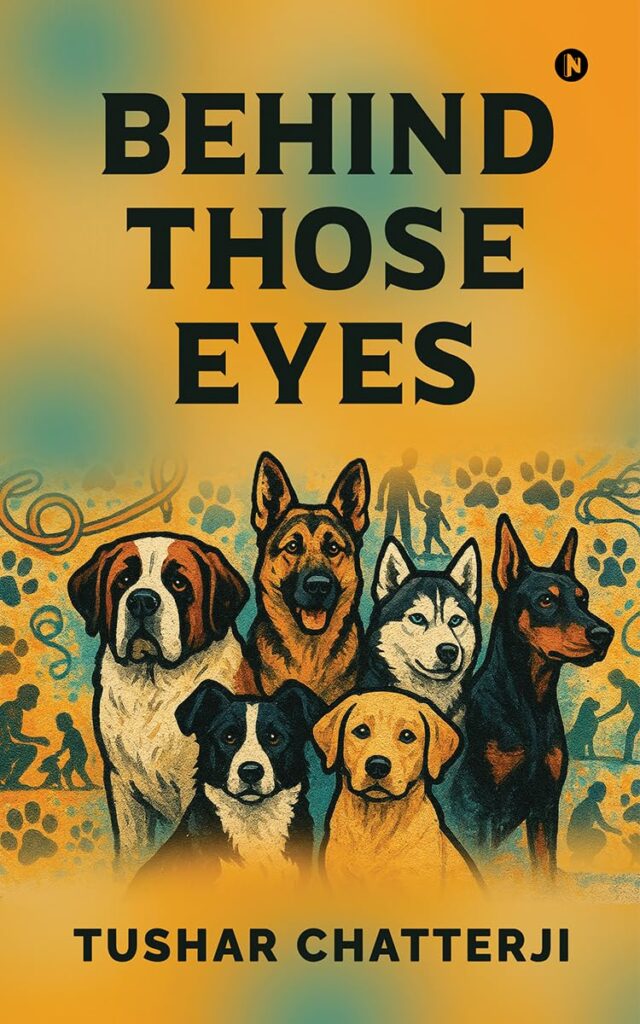
Tushar Chatterji: Behind Those Eyes is a tapestry of interconnected stories that step into the emotional worlds of dogs—worlds shaped by love, loyalty, loss, resilience, and an unspoken understanding of humans.
Narrated through multiple canine perspectives, the book travels across contrasting landscapes: unforgiving city streets, serene mountain ranges, coastal expanses, and opulent homes. Each setting becomes a backdrop against which questions of belonging, freedom, captivity, and companionship unfold.
At its heart, the book is a meditation on coexistence—how humans and dogs shape each other’s lives in ways that are quiet yet profound. Every story explores a different dimension of love: maternal, redemptive, sacrificial, and eternal.
Piku’s journey begins on the streets, where survival is instinctive and fleeting. Through hunger, fear, and her mother’s silent heroism, she learns resilience before being rescued into a home where warmth and affection redefine her existence. Her bond with a young girl, Rhea, becomes transformative—yet her aging and eventual decline remind us of love’s impermanence and the ache it leaves behind.
Rani’s story is one of guarded trust. Once a wary street dog, she slowly opens her heart to a woman and her son who adopt her. As the family navigates emotional upheavals, Rani becomes their unspoken anchor, embodying devotion and empathy that heal wounds words cannot reach.
In the Himalayas, Nala’s narrative explores freedom and instinct. Roaming amidst cold magnificence, she encounters a woman confronting her mortality. Their bond—born of mutual strength and vulnerability—becomes a quiet meditation on empathy and the choice to belong.
Laila and Chelsea’s story examines privilege and confinement. Living in luxury, their lives are polished yet restricted. Chelsea’s brief escape offers a fleeting taste of liberty, while Laila finds solace in sisterhood, proving that love can survive even within gilded cages.
The book closes by the sea with Dolly, whose reflections on motherhood, solitude, and aging bring the narrative full circle. Haunted by separation from her daughter, Lolla, Dolly finds renewed purpose when young Leo enters her life, reigniting her instinct to nurture. Her story speaks of acceptance, longing, and the hope of reunion beyond time.
Ultimately, Behind Those Eyes is both elegy and celebration—a tribute to the emotional intelligence of dogs and the moral clarity with which they love. It invites readers to look closer, to recognize that behind every pair of eyes lies a story of survival, tenderness, and devotion that transcends words, species, and lifetimes.
LiFT: Why did you choose this title?
Tushar Chatterji: I’ve always believed that a dog’s eyes speak far more than words ever could. Growing up with one, I sensed emotions—love, fear, longing, forgiveness—communicated silently yet with startling clarity. Behind Those Eyes emerged from this belief.
Telling these stories through a canine lens allowed me to strip emotions down to their rawest form. Through Piku, Nala, Laila, Chelsea, Dolly, and Rani, I wanted to present instinctive, unfiltered narratives—free of pretense or sentimentality.
Their experiences of joy and heartbreak, belonging and betrayal, reveal a quiet honesty that often eludes human expression. The title reflects my intent to remind readers of qualities we tend to unlearn over time: unconditional love, unwavering loyalty, and the grace of forgiveness.
Behind those eyes, I hope readers don’t just see animals—but glimpses of their own emotional truths.
LiFT: When did you realize that you wanted to be a writer, and what was your inspiration behind it?
Tushar Chatterji: I can’t pinpoint a singular moment when I decided to become a writer, because writing was always present in my life in some form. It began casually—scribbles, fragments of thoughts, unfinished ideas—without any intention of seriousness or preservation. The shift happened during the pandemic.
With the world forced into stillness, something clicked. I began engaging with writing more deliberately and enrolled in a scriptwriting course at Actor Prepares in Mumbai, driven by my lifelong love for cinema across languages and genres. That experience gave structure to my thoughts and helped ideas take shape with clarity and intent.
Over the years, through countless iterations and self-doubt, those scattered ideas evolved. Eventually, I gathered the courage to bring them together as a published book—a milestone that marks where my journey currently stands.
As for inspiration, it comes from everywhere: my travels, conversations with friends and colleagues, family, and even fleeting encounters with strangers. I don’t rely on a single lens. Instead, it’s the convergence of perspectives that helps me see beyond the ordinary—and that is what I attempt to channel through my writing.
LiFT: Where do you see yourself ten years down the line in the world of literature?
Tushar Chatterji: It’s difficult to predict, but I hope to be a writer who continues to grow, experiment, and publish stories that have long lived in my drafts and thoughts. There are several themes waiting patiently in folders and half-formed ideas, and I hope to give them life through words.
If, ten years from now, I’m still creating worlds that excite me and characters that feel alive—and if readers find resonance in them—that would be deeply fulfilling.
LiFT: How important do you think marketing and the quality of a book are in promoting it and increasing its readership?
Tushar Chatterji: They are absolutely critical. Writing a book requires immense emotional and creative investment, and that effort deserves visibility. Strong editorial quality ensures that the story does justice to the writer’s vision, while effective marketing ensures it reaches the readers it was written for.
Marketing is not merely promotional—it is a bridge between the writer and the audience. When done thoughtfully and persistently, it expands readership, fosters recognition, and enables meaningful connections across genres and geographies.
Together, I believe quality and marketing complete the publishing lifecycle and give a book its rightful chance to be discovered.
LiFT: What message do you want to convey to people through your writing?
Tushar Chatterji: At its core, my writing aims to evoke emotion. I gravitate toward stories that explore relationships—human and otherwise—through moments that are subtle yet transformative.
With Behind Those Eyes, I invite readers to momentarily step away from material definitions of life and enter a world where communication isn’t driven by words.
It’s a world shaped by gestures, silences, and emotions too pure to articulate. If readers—dog lovers or not—feel that unspoken connection even briefly, then I believe the purpose of my writing has been fulfilled.
LiFT: What do you do apart from writing?
Tushar Chatterji: I work in the corporate domain of medical affairs and scientific communication for a reputed global organization based in Hyderabad. With close to 14 years in this field, I’ve achieved significant professional milestones and accolades, which have shaped my discipline and perspective alongside my creative pursuits.
LiFT: What activities do you resort to when you face writer’s block?
Tushar Chatterji: I’m inherently an outdoor person. Offbeat travel plays a huge role in resetting my perspective and often becomes the seed for new narratives. I also play cricket, climb mountains, and participate in long-distance running events. These activities keep me grounded, humble, and mentally agile—helping me redirect energy and return to writing with renewed clarity.
LiFT: What if your story were to be adapted into a movie? Who would you want to work as the director or actors in it?
Tushar Chatterji: I haven’t thought deeply about adaptations, as my primary focus was to publish the book and stay true to the craft. However, if someone feels compelled to adapt any of these stories into a short film or script, I’d be more than happy to collaborate and contribute to bringing it to life.
LiFT: Are you working on your next book? If so, could you tell us something about it?
Tushar Chatterji: Yes, I am, and it’s nearing completion. While I’d prefer not to reveal too much, I can say that it explores themes vastly different from Behind Those Eyes. This time, human emotions take center stage.
LiFT: What are your suggestions for budding writers and poets to help them improve their writing skills?
Tushar Chatterji: I wouldn’t call myself accomplished enough to offer advice, but I do believe this: it’s okay to doubt your writing in the beginning. What matters is persistence. In the pursuit of refinement and honesty, you might just create something that surprises you. Confidence often follows action. Stay open to feedback, contrasting perspectives, and lived experiences. Let them shape and sharpen your voice—and trust that, eventually, your stories will find their way to the world.
Click here to order Tushar Chatterji’s Book – Behind Those Eyes