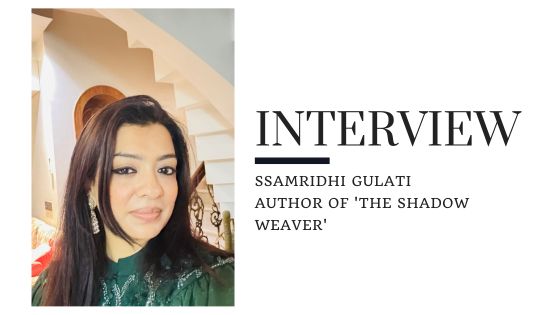
About Ssamridhi Gulati
Ssamridhi Gulati is a psychologist and author known for crafting emotionally immersive, thought-provoking narratives rooted in human consciousness and speculative fiction. Her work explores identity, alternate choices, and the unseen lives we continue to live in parallel realities.
LiFT: Tell us about your book, the journey of writing it, and its content.
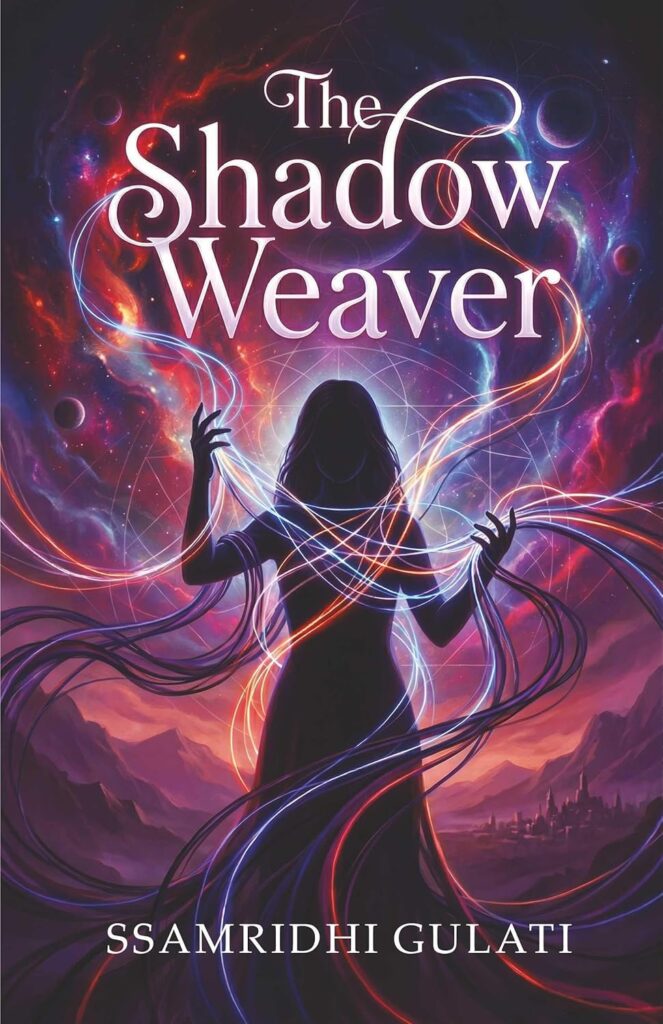
Ssamridhi Gulati: The Shadow Weaver was never just a story—it was a question that refused to leave me.
What happens to the lives we don’t live? To the choices we never make?
What began as quiet curiosity slowly unfolded into a multiverse of emotions, identities, and possibilities. Writing this book felt less like creating and more like discovering—as if the story already existed somewhere, and I was simply tracing its threads.
At its heart, the book follows Mayaa, a traveler across parallel realities, who begins to realize that identity is not fixed—it is shaped by every choice we make, and every choice we don’t. It blends science with emotion, psychology with possibility, and explores the haunting idea that somewhere, every version of us is still living.
LiFT: Why did you choose this title?
Ssamridhi Gulati: The title The Shadow Weaver came from the core idea of the book—that our unlived lives don’t disappear… they become shadows.
And someone, somewhere, is weaving them.
It represents both the mystery and the power within the story—the idea that unseen forces, choices, and alternate selves are constantly shaping our reality. The “shadow” is not darkness—it is depth. And the “weaver” is not just a character, but a force that connects everything we are, and everything we could have been.
LiFT: When did you realize that you wanted to be a writer, and what was your inspiration behind it?
Ssamridhi Gulati: I don’t think I ever “decided” to be a writer.
I think I always was one—just in silence.
Long before I wrote stories, I was observing them—in people, in emotions, in the spaces between words. Being a psychologist shaped this deeply; it made me see the layers within human experience.
Writing became my way of holding those layers… of giving form to feelings that don’t always have language.
My inspiration has never been just storytelling—it has been understanding. And perhaps, helping others feel understood.
LiFT: Where do you see yourself ten years down the line in the world of literature?
Ssamridhi Gulati: Ten years from now, I don’t just see myself as a writer—I see myself as a universe-builder.
I want to create stories that don’t just entertain, but stay. Stories that make people question their own realities, their choices, their identities. I see The Shadow Weaver as just the beginning of a larger series—worlds that expand, characters that evolve, and ideas that linger long after the last page.
And somewhere in that journey, I hope to build not just books… but a space where people feel seen in the lives they are living—and the ones they aren’t.
LiFT: How important do you think marketing and the quality of a book are in promoting it and increasing its readership?
Ssamridhi Gulati: Both are important—but they serve very different roles.
Marketing may bring readers to your book, but only the quality of the story can make them stay.
In today’s world, visibility matters—you need marketing to ensure your story reaches the right audience. But no amount of marketing can replace authenticity. Readers connect with honesty, with depth, with something that feels real.
I believe the most powerful books are not just promoted—they are felt. And once a story is felt, it finds its way… beyond algorithms, beyond strategies, into people’s lives.
LiFT: What message do you want to convey to people through your writing?
Ssamridhi Gulati: I don’t write to give answers—I write to ask the questions people are afraid to sit with.
My stories live in the space between who we are and who we could have been… between the lives we chose and the ones we left behind.
If there’s one thing I hope people feel through my words, it’s this—nothing within you is ever truly lost. Every version of you, every choice, every shadow… it all exists, it all matters.
And maybe, just maybe, you’re allowed to explore yourself without guilt.
LiFT: What do you do apart from writing?
Ssamridhi Gulati: I am a psychologist by profession and a storyteller by soul.
Beyond writing, I spend my time understanding people—their silences, their patterns, their unspoken emotions. I also create content that blends psychology with storytelling, building spaces where people feel seen, not judged.
In many ways, everything I do—whether it’s listening, observing, or creating—is just another form of storytelling.
LiFT: What activities do you resort to when you face writer’s block?
Ssamridhi Gulati: I don’t fight writer’s block—I listen to it.
Sometimes it’s not a lack of words, it’s an overflow of unprocessed emotion. So I step away… I observe people, I sit with my thoughts, I revisit old memories, or I simply exist without forcing meaning.
And almost always, the story finds its way back to me—when I stop chasing it.
LiFT: What if your story were to be adapted into a movie? Who would you want to work as the director or actors in it?
Ssamridhi Gulati: If The Shadow Weaver were to become a film, I would want a director who understands silence as much as spectacle—someone like Sanjay Leela Bhansali for his visual poetry, or Christopher Nolan for his ability to bend time and reality into emotion.
For Mayaa, I would choose an actor who can hold entire universes behind her eyes—perhaps Alia Bhatt, for her emotional depth and quiet intensity.
For Yayati, someone layered and enigmatic like Vicky Kaushal—grounded, yet carrying an unspoken storm.
Because this story isn’t just about what is seen…
it’s about what is felt between realities.
LiFT: Are you working on your next book? If so, could you tell us something about it?
Ssamridhi Gulati: Yes… and in many ways, it has already begun writing itself.
The next book, tentatively titled The Shadow Whisperer, steps deeper into the multiverse—into the spaces where choices don’t just create alternate lives, but consequences that echo across them.
This time, the story leans into Yayati—his silence, his power, and the burden of knowing more than one truth at once.
While Mayaa remains… not always present, but always felt—like an axis around which realities turn.
If The Shadow Weaver was about discovering the threads,
this one is about learning what it costs to pull them.
LiFT: What are your suggestions for budding writers and poets to help them improve their writing skills?
Ssamridhi Gulati: Write like no one is watching—but edit like the world will.
Don’t chase perfection. Chase honesty.
Because readers don’t remember flawless sentences… they remember the ones that felt like a mirror.
Read deeply, not just widely. Sit with stories. Let them change you.
And most importantly—don’t be afraid of your own voice. It will feel unfamiliar at first, even uncomfortable… but that’s how truth sounds before it becomes yours.
And on the days when words refuse to come—
remember, even silence is part of the story.
Click here to order Ssamridhi Gulati’s Book – The Shadow Weaver