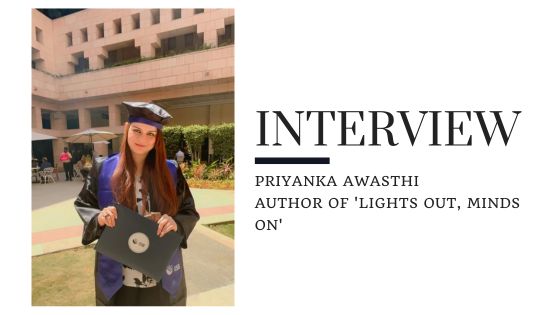
About Priyanka Awasthi
Priyanka Awasthi is the author of Lights Out, Minds On, a Formula 1-inspired exploration of mindset, pressure, identity, and performance. Combining analytical thinking with emotional insight, she uses the world of F1 to examine bigger questions about ambition, relationships, resilience, and the human condition.
LiFT: Tell us about your book, the journey of writing it, and its content.
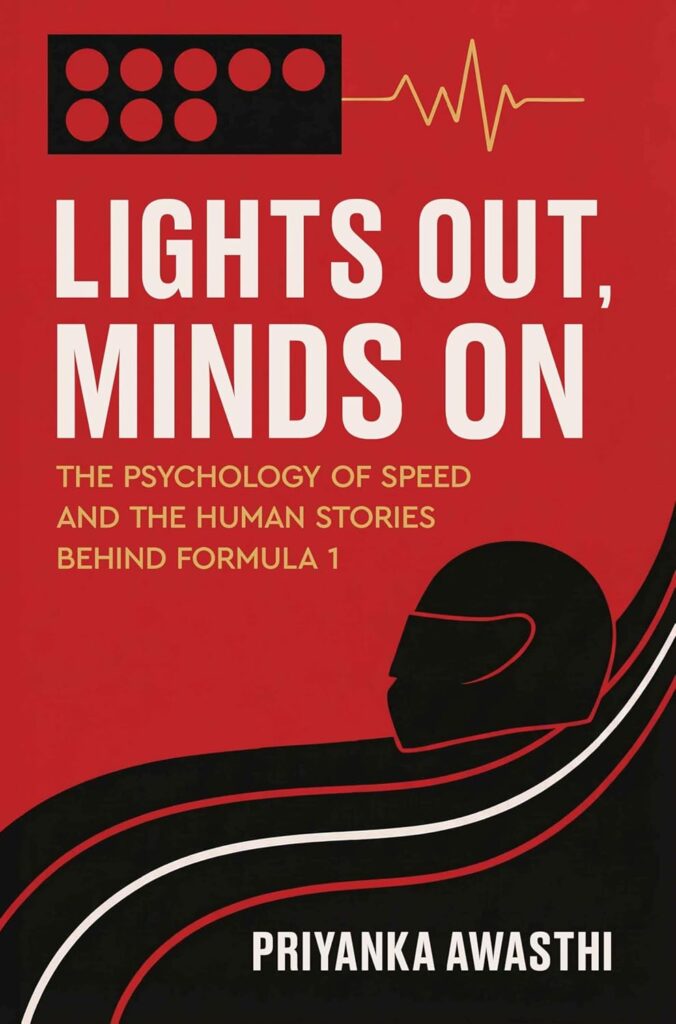
Priyanka Awasthi: Lights Out, Minds On is a book that uses Formula 1 as a lens to explore mindset, pressure, ambition, identity, relationships, and performance. While F1 is the surface world of the book, its real subject is the human condition: what it takes to endure scrutiny, carry expectation, handle rivalry, and keep going when the stakes are high. The journey of writing it came from a long-standing fascination with the psychology behind elite performers. I wanted to write something that went beyond sport commentary and used the drivers, teams, and emotional intensity of F1 to reflect on work, love, discipline, self-doubt, resilience, and reinvention. The result is a book that blends sport, reflection, psychology, and self-understanding in a way that I hope feels both exciting and deeply personal.
LiFT: Why did you choose this title?
Priyanka Awasthi: I chose the title Lights Out, Minds On because it captures both the spirit of Formula 1 and the deeper theme of the book. “Lights out” is one of the most iconic phrases in racing, associated with the start, pressure, and adrenaline of competition. “Minds on” shifts the focus inward, toward psychology, self-mastery, emotional control, and mental sharpness. Together, the title reflects exactly what the book is about: not just racing on the track, but what happens inside people when life demands performance.
LiFT: When did you realize that you wanted to be a writer, and what was your inspiration behind it?
Priyanka Awasthi: I realized I wanted to write when I noticed that I was always drawn not just to events, but to what they meant beneath the surface. I have always been interested in people, contradictions, ambition, heartbreak, reinvention, and the stories hidden under public image. Writing became the natural way for me to make sense of that. My inspiration comes from wanting to connect observation with feeling: to take something people think they already understand, like sport or fame, and reveal the emotional and psychological layers underneath it. That instinct is what led me to this book.
LiFT: Where do you see yourself ten years down the line in the world of literature?
Priyanka Awasthi: Ten years from now, I hope to have built a body of work that is distinctive in voice and generous in insight. I want to continue writing books that sit at the intersection of culture, psychology, performance, and the human condition, using modern icons and high-pressure worlds as mirrors for larger truths. More than simply publishing books, I hope to contribute a perspective that feels fresh, emotionally intelligent, and memorable, and to grow into a writer whose work readers return to for both reflection and resonance.
LiFT: How important do you think marketing and the quality of a book are in promoting it and increasing its readership?‘
Priyanka Awasthi: Both are essential, but they play different roles. Quality is the foundation because a book has to genuinely move, engage, or stay with the reader if it is going to have a lasting life. Marketing creates visibility, opens doors, and helps the book reach the people who may connect with it. In today’s world, good writing alone is often not enough to ensure discovery, but strong marketing without substance does not build meaningful readership for long. The most powerful combination is a book with real depth, supported by thoughtful, authentic promotion.
LiFT: What message do you want to convey to people through your writing?
Priyanka Awasthi: The core message of my book is that performance is never just external. Behind every visible achievement are invisible battles: discipline, fear, loneliness, emotional control, hunger, doubt, and the need to keep evolving. I want readers to see that pressure is not only something to survive, but something that can reveal character. Through the world of Formula 1, I hope to remind people that ambition and vulnerability can coexist, that self-mastery matters as much as talent, and that the mind often decides the race before life ever reaches the starting grid.
LiFT: What do you do apart from writing?
Priyanka Awasthi: Apart from writing, I work in analytics, which has shaped the way I observe patterns, people, and performance. I am deeply interested in culture, psychology, sport, and storytelling, and much of my creative thinking comes from studying how public figures, high-pressure environments, and personal ambition intersect. I also spend time reading, reflecting, and exploring ideas that connect modern life with deeper emotional and psychological truths.
LiFT: What activities do you resort to when you face writer’s block?
Priyanka Awasthi: When I face writer’s block, I usually step away from forcing the page and return to observation. I read, revisit notes, listen to interviews, watch races or cultural material connected to my subject, and allow myself to reconnect with the emotional core of what I am trying to say. Sometimes clarity comes not from writing harder, but from giving the mind space to absorb, reflect, and return with sharper instinct.
LiFT: What if your story were to be adapted into a movie? Who would you want to work as the director or actors in it?
Priyanka Awasthi: As this book is not a novel, I would imagine it less as a traditional film and more as a visually rich documentary or limited series blending sport, psychology, and cultural storytelling. I would love for it to be adapted by a director with a strong instinct for emotion, intensity, and character, someone who can balance spectacle with inner life. The appeal of the book lies not in fictional casting, but in the universality of the ideas it explores through the world of Formula 1.
LiFT: Are you working on your next book? If so, could you tell us something about it?
Priyanka Awasthi: Yes, I am interested in continuing to write work that sits at the intersection of culture, psychology, identity, and performance. My broader creative direction is to explore modern icons and high-pressure worlds as mirrors of the human condition. While each project may take a different form, the thread that connects them is a desire to understand what ambition, reinvention, vulnerability, and public life reveal about us.
LiFT: What are your suggestions for budding writers and poets to help them improve their writing skills?
Priyanka Awasthi: My biggest suggestion is to write with honesty before you write for approval. Read widely, pay attention to people, and develop the habit of noticing what lies beneath the obvious. Good writing is not only about language; it is about clarity of thought, emotional truth, and the courage to say something real. It also helps to keep working consistently, because voice is rarely found in one moment of inspiration; it is built through practice, patience, and revision.
Click here to order Priyanka Awasthi’s Book – Lights out, Minds on