About Vinod Nair
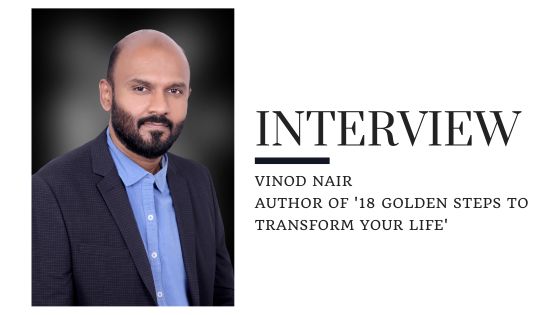
Vinod Nair is a US Fulbright Scholar and alumnus of IIM Bangalore and Carnegie Mellon University, bringing over 28 years of global leadership across entrepreneurship, venture creation, investing, and mentoring. A visionary bridge between ancient wisdom and modern enterprise, he is passionately dedicated to transforming India’s timeless knowledge into practical solutions that drive purpose, performance, and lasting impact.
LiFT: Tell us about your book, the journey of writing it, and its content.
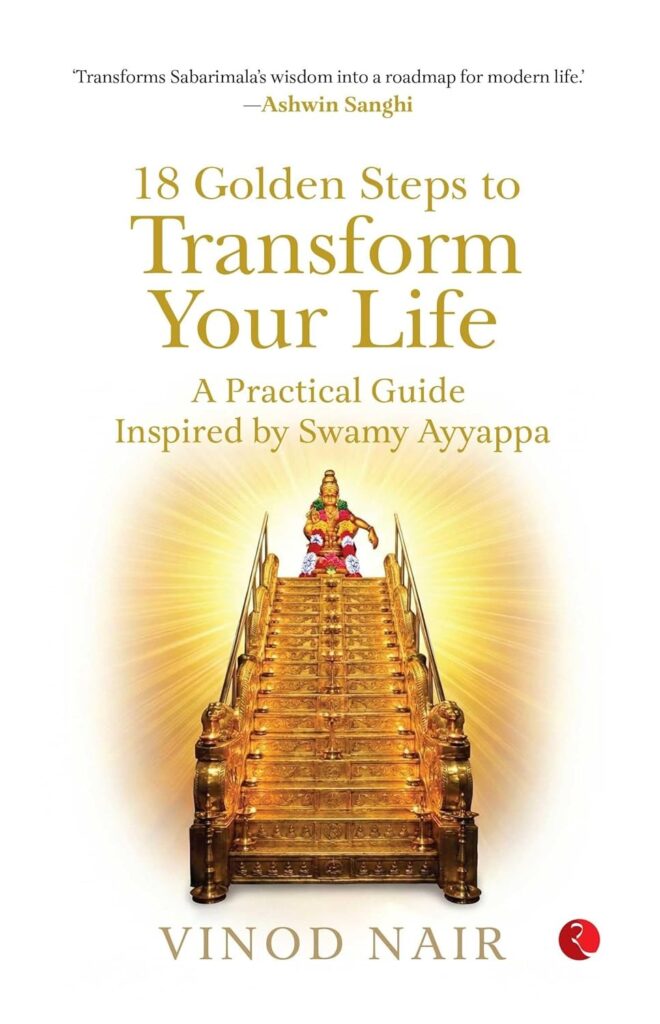
Vinod Nair: 18 Golden Steps to Transform Your Life is a humble attempt to translate the timeless spiritual wisdom of Lord Ayyappa and the sacred eighteen golden steps at Sabarimala into practical guidance for everyday living.
For countless devotees, the pilgrimage to Sabarimala is a deeply transformative experience. Yet, once the pilgrimage ends, many struggle to carry that heightened awareness, discipline, and inner purity back into their daily routines. This book was born from a personal desire to bridge that gap. I wanted to explore how the spiritual principles symbolised by each of the eighteen steps can continue to guide us long after we return home.
The journey of writing this book was deeply introspective. It involved reflection, study of Vedantic teachings, observation of real-life struggles, and my own spiritual experiences. Each chapter represents one step, unfolding a core virtue such as discipline, humility, courage, gratitude, self-control, and compassion. These values are presented not merely as philosophical ideas, but as living practices that can be applied in modern contexts.
The book blends spiritual insight with relatable examples from everyday life, including challenges faced by students, professionals, leaders, and families. The intention is to offer readers a simple, practical roadmap for inner growth and emotional balance. Rather than prescribing rigid rules, the book gently encourages self-reflection, conscious living, and continuous personal evolution. Ultimately, 18 Golden Steps to Transform Your Life is an invitation to walk a lifelong spiritual path, inspired by the sacred traditions of Sabarimala, and to discover a more authentic, peaceful, and purposeful way of living.
LiFT: Why did you choose this title?
Vinod Nair: The title 18 Golden Steps to Transform Your Life was chosen with deep reverence and intention. The eighteen golden steps at Sabarimala are not merely architectural elements. They are sacred symbols of spiritual ascent, self-discipline, and inner purification. For devotees, climbing these steps is a moment of profound humility, surrender, and devotion.
Each step represents a spiritual principle that guides seekers toward higher awareness and moral clarity. I wanted the title to reflect both this sacred symbolism and its relevance to modern life. The word “golden” signifies purity, value, and timelessness, while “steps” conveys the idea of gradual progress rather than instant transformation.
True inner change does not happen overnight. It unfolds through consistent effort, reflection, and practice. The title communicates this journey of steady growth, encouraging readers to embrace transformation as a process, not a destination. By connecting the sacred eighteen steps with personal growth, the title serves as a bridge between ancient spiritual wisdom and contemporary self-development. It invites readers to embark on a journey that is deeply spiritual, yet profoundly practical, leading them toward lasting inner transformation.
LiFT: When did you realize that you wanted to be a writer, and what was your inspiration behind it?
Vinod Nair: My journey into writing began quite naturally, long before I consciously thought of myself as a writer or poet. I have always been drawn to introspection, silence, and observation. Words became a way to reflect, process, and express experiences that were often difficult to articulate in conversation.
Over time, reflective writing emerged as a medium to explore deeper emotions, spiritual questions, and the subtle movements of the inner world. I found inspiration in everyday moments, human struggles, nature, devotional practices, and sacred texts. Spiritual traditions, especially the philosophy of Vedanta and the devotional atmosphere of Sabarimala, deeply shaped my inner landscape and naturally flowed into my writing.
Rather than aspiring to be a writer, I felt a growing urge to share insights that could help others pause, reflect, and reconnect with their deeper self. Writing became an offering, a way to serve and contribute meaningfully.
The real turning point came when readers began sharing how my words had helped them find clarity, comfort, or renewed faith. That response reaffirmed my belief that writing could be a bridge between personal experience and collective healing. Since then, writing and poetry have remained integral to my spiritual and creative journey, guiding me toward deeper awareness and purpose.
LiFT: Where do you see yourself ten years down the line in the world of literature?
Vinod Nair: I see myself as a bridge between the timeless wisdom of ancient Indian spiritual and philosophical traditions and the realities of modern life. Our sacred literature holds profound insights into human nature, purpose, discipline, leadership, resilience, and inner growth. My aspiration is to reinterpret this vast knowledge in ways that are practical, accessible, and deeply relevant for contemporary readers.
I wish to transform India’s eternal wisdom into everyday tools that help individuals lead more purposeful lives, perform with clarity and integrity, and create lasting positive impact in their personal and professional worlds. Whether through books, poetry, essays, or reflections, my intention is to make ancient teachings resonate naturally with students, professionals, leaders, and seekers across generations. In the world of literature, I hope to contribute a body of work that inspires conscious living, ethical leadership, emotional balance, and spiritual growth. If my writing can help even a small section of society reconnect with its cultural roots while navigating modern challenges with wisdom and compassion, I would consider that a deeply fulfilling journey.
LiFT: How important do you think marketing and the quality of a book are in promoting it and increasing its readership?
Vinod Nair: Both marketing and quality are essential, and they must work together in harmony. Marketing creates visibility, but quality creates longevity. A well-marketed book may attract initial attention, but only a well-written, meaningful book builds trust, loyalty, and sustained readership. In my view, quality is the foundation. If a book does not carry depth, authenticity, clarity of thought, and emotional or intellectual value, no amount of promotion can create lasting impact. Readers today are discerning. They connect with sincerity, relevance, and substance far more than surface appeal.
LiFT: What message do you want to convey to people through your writing?
Vinod Nair: Through my writing, I wish to remind people of their inherent strength, dignity, and limitless potential. In the rush of modern life, we often drift away from our deeper self, becoming trapped in anxiety, comparison, and constant striving. My message is an invitation to pause, reflect, and reconnect with the wisdom that already resides within.
I want readers to discover that true success is not merely external achievement, but inner balance, ethical living, compassion, and clarity of purpose. By drawing upon India’s ancient spiritual traditions and philosophical insights, I aim to present simple, practical tools that help individuals lead more conscious, meaningful, and harmonious lives.
At its core, my writing seeks to inspire courage, self-discipline, humility, and empathy. I hope to encourage readers to walk their personal journeys with integrity, resilience, and faith, transforming everyday challenges into opportunities for growth. If my words can help even one person find peace in confusion, strength in adversity, or purpose in uncertainty, I would consider my work truly worthwhile.
LiFT: What do you do apart from writing?
Vinod Nair: I am deeply engaged in the entrepreneurial ecosystem as an entrepreneur, investor, mentor, and venture builder. I actively work with startups and emerging businesses, helping them shape strategy, build sustainable models, and scale with purpose and integrity. In many ways, entrepreneurship and writing complement each other. One allows me to create tangible impact in the business world, while the other enables me to explore inner growth, reflection, and meaning. Together, they form a holistic path of purpose, creativity, and service.
LiFT: What activities do you resort to when you face writer’s block?
Vinod Nair: When I encounter writer’s block, I see it not as resistance, but as a signal to pause and realign. Instead of forcing words, I step back and allow silence, reflection, and observation to guide me. Ultimately, I trust that creativity has its own rhythm. By honoring patience and awareness, the words return, often with greater clarity and depth.
LiFT: Are you working on your next book? If so, could you tell us something about it?
Vinod Nair: Yes, I am currently working on a couple of book concepts that are very close to my heart, both rooted in ancient Indian wisdom yet deeply aligned with modern realities.
One of the projects is a clear, intellectually honest, and practical guide to Sanatana Dharma, written especially for modern readers who are curious, confused, or quietly skeptical about Hinduism. Structured as both an explanatory guide and a comprehensive FAQ, the book addresses difficult, uncomfortable, and often misrepresented questions about Hindu philosophy, deities, scriptures, caste, karma, rebirth, women, ritual, and social critique.
The second project is a modern self-help and inner-discipline guide for young adults navigating distraction, anxiety, identity confusion, and moral uncertainty in a hyperconnected world. Rooted in the timeless wisdom of the Bhagavad Gita and the Mahabharata, the book reimagines ancient teachings as a practical, psychologically grounded framework for mastering attention, desire, work, relationships, and digital life. Together, these two projects reflect my ongoing effort to bridge ancient Indian wisdom with contemporary challenges, making our sacred knowledge relevant, actionable, and transformative for today’s generation.
LiFT: What are your suggestions for budding writers and poets to help them improve their writing skills?
Vinod Nair: The first and most important advice I would offer is to read deeply and widely. Reading exposes writers to different voices, styles, rhythms, and perspectives, helping them discover both craft and clarity of expression. Sacred texts, classical literature, poetry, philosophy, and contemporary writing all play an important role in shaping a well-rounded literary sensibility.
Second, write consistently, even when inspiration feels absent. Writing is a discipline before it becomes an art. Regular practice strengthens observation, language, and emotional articulation. It also builds the inner resilience needed to face self-doubt and creative uncertainty.
Third, cultivate silence, awareness, and observation. The finest writing often arises from deep listening to life, people, emotions, and nature. Stillness helps writers access authenticity rather than imitation.
Fourth, remain honest. Do not write to impress. Write to express. Authenticity creates resonance, while artificial complexity distances readers. Finally, be patient with your growth. Writing is a lifelong journey. Allow your voice to evolve naturally, shaped by experience, reflection, and humility. If writing becomes a sincere exploration of truth, beauty, and meaning, skill and mastery will follow in time.
Click here to order Vinod Nair’s Book – 18 Golden Steps to Transform Your Life