About Ranjit Kulkarni
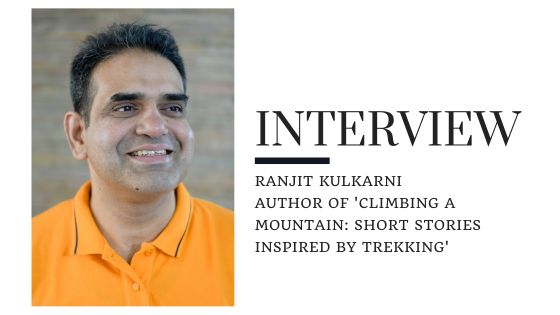
Ranjit Kulkarni writes about people you might meet every day – colleagues, neighbors, friends at the café – and turns their ordinary moments into extraordinary stories. He is the creator of the much-loved characters Jigneshbhai and Swami, whose humorous coffee conversations blend laughter with gentle wisdom.
Born and raised in Mumbai, Ranjit grew up in the bustle of urban India. An alumnus of NIT Warangal and IIM Lucknow, he spent nearly 25 years as a corporate executive before taking up writing. His background in the real world of work and life fuels his writing, giving it both authenticity and relatability.
Through his collections – from the Jigneshbhai & Swami series to the short stories about everyday life – Ranjit transforms the seemingly routine into narratives filled with humor, reflection, and heart.
His stories have appeared in national and international literary journals and anthologies. Today, he lives in Bangalore, continuing to explore everyday life through the eyes of Jigneshbhai and Swami and his characters.
LiFT: Tell us about your book, the journey of writing it, and its content.
Ranjit Kulkarni: About the Book:
Some mountains aren’t just made of rock and ice.
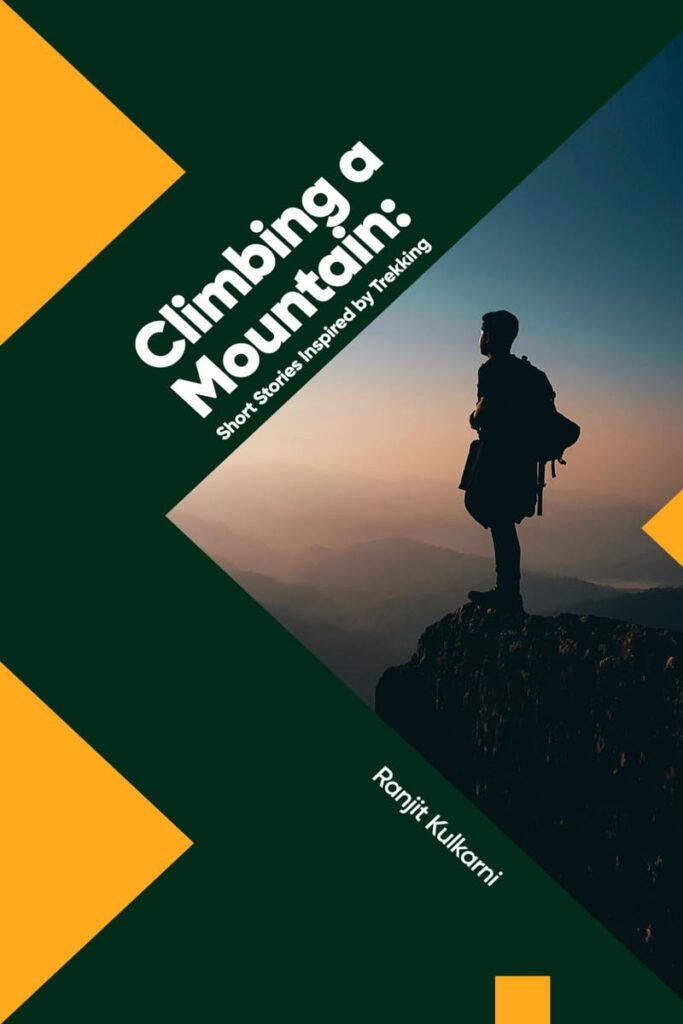
In this captivating collection of short stories, we meet ordinary people on extraordinary treks, facing the challenges of the Himalayas. Inspired by my own journeys of trekking, these tales go beyond the physical climb to explore the hidden battles we all face. While climbing any mountain is an adventure in itself, the real adventure lies within the characters themselves, as they confront their own personal “mountains” in the heart of nature.
The journey of writing it:
The journey of writing this book started after I attended a session taken by a friend of mine who is also an Everest Summiteer. It made me realize that any trek or mountain expedition is more than just the physical aspect, but also consists of a largely unseen mental aspect. I recollected many of my past treks and also kept my eyes and ears open during my future treks after that point (including one to Annapurna Base Camp) observing characters on my journeys, and that’s how the seed of this book got germinated and sprouted in the form of the character-based stories in this book.
Content of the book:
Each character is on a quest to conquer a mountain far bigger than the one under their boots.
A couple discovers their Love isn’t Enough to scale the mountain of life.
A young man seeking freedom and achievement finds Humble Pie instead.
A middle-aged man searches for Peace and gets Noise.
A young woman strives to build her confidence, one step at a time on A New Summit.
A Tough Old Woman on a Trek pursues her quest for independence and detachment with love.
A man in Climbing a Mountain, attempting to summit Everest, finds spiritual inspiration from his late mother.
Like Maurice Herzog’s legendary words, “There are other Annapurnas in the lives of men,” these stories reveal the unseen peaks we climb every day. Climbing a Mountain is a testament to the resilience of the human spirit—a compelling reminder that everyone has a summit to reach.
LiFT: Why did you choose this title?
Ranjit Kulkarni: On 22nd May 2024, a dear friend of mine climbed to the top of a mountain. It was no ordinary mountain top. It was the tallest mountain in the world – Sagarmatha, Chomolungma – the Mother Goddess of the Sky. Most in the modern world know it as Mount Everest.
It is inexplicable why people would take pains to get to a place where, even in clear summer skies, the temperatures are several degrees below zero; where the air is thin enough to make human life impossible beyond a few minutes; where the heights instil fear at every step; where death stares you in the face every moment; and where accidents of nature are a way of life. These are more than enough reasons to push away any ordinary person.
But then, these are no ordinary people – the ones who not only attempt but complete this extraordinary feat of endurance – a coming together of body, mind, and spirit in a manner that very few other feats attempted by humans might require.
I have been on smaller (and much less challenging) treks in the Himalayas. They were nowhere near being as tough as climbing Everest. But I as well as the trekkers accompanying me faced the same challenge of climbing a mountain, albeit a much smaller one. It is the same coming together of body, mind and soul that it takes, even if in its own smaller way.
The stories in this collection are inspired by this onerous feat of climbing a mountain, the arduous journey of completing a trek. Hence, the title ‘Climbing a Mountain’ – both the real and the unseen one.
LiFT: When did you realize that you wanted to be a writer, and what was your inspiration behind it?
Ranjit Kulkarni: I didn’t want to be a writer as much as I have always been a writer. What I have been writing kept changing throughout my life. In my earlier years, I used to write stories, poems and essays. Then I turned to writing diaries and notes from my readings. In my corporate life in the area of consulting, it was story telling of a different kind – with business goals in mind. Eventually, after having spent two and half decades there, I decided to hang up my boots there and give serious fiction writing a shot, and settled on short fiction. My inspiration for writing is two-fold. One is internal which is largely to pursue an independent life that enables me write whatever I want, whenever I want irrespective of whether anyone reads it or not. And second is external – which is to create a body of work over the years around everyday life, characters and stories (a world I belong to), and make readers think and laugh at the same time.
LiFT: Where do you see yourself ten years down the line in the world of literature?
Ranjit Kulkarni: I don’t have any specific goals but I see myself writing ten years from now. Hopefully, I would have created more stories, got inspired by more characters and penned more books in that time. As long as the hand and the brain work, I plan to write.
LiFT: How important do you think marketing and the quality of a book are in promoting it and increasing its readership?
Ranjit Kulkarni: I think marketing is important when the quality of the book is good. If you have a lousy book, no marketing can sell it. But once a good product has been created, marketing’s role is to reach as many potential readers as possible, with a message that will resonate with a few of them. Not everyone will be interested in every book, but marketing should help reach the right readers for a book that is well-written.
LiFT: What message do you want to convey to people through your writing?
Ranjit Kulkarni: I want to convey wisdom about everyday life wrapped in laughter through my stories and Jigneshbhai and Swami episodes. I would like the reader to take away some entertainment and some enlightenment from my writing. I want to make the reader think and laugh at the same time after reading my writing.
LiFT: What do you do apart from writing?
Ranjit Kulkarni: I am a professional management consultant with a long career spent in data analytics, consulting, research and technology, across many large companies. While I do not pursue a full-time job anymore, I do freelance consulting from time to time with startups and small companies in this area, by running their projects and mentoring their teams. That apart, I am an investor in capital markets, a student of spirituality and an avid traveler. I also read a lot of fiction and non-fiction that often feeds my writing.
LiFT: What activities do you resort to when you face writer’s block?
Ranjit Kulkarni: I take a short break when faced with writer’s block – perhaps for a few days, not forcing myself to write. But it is a limited reprieve that I ensure doesn’t turn into prolonged laziness. Once it is over, I get to my desk and try to restart my routine of putting words on paper. It doesn’t matter whether the writing is good, bad or ugly, but I almost force myself to write in that situation. I have often seen that after an initial starting trouble, words flow thick and fast. The only solution to writer’s block, as many eminent writers have said, is to write.
LiFT: What if your story were to be adapted into a movie? Who would you want to work as the director or actors in it?
Ranjit Kulkarni: My writing is not adaptable to movies because I write short fiction (stories and Jigneshbhai and Swami episodes), though I am told some of it is adaptable into a mini-series with episodes. I haven’t thought about who would act or direct it – as long as the spirit of the characters and stories is captured in the screenplay, it can be anyone.
LiFT: Are you working on your next book? If so, could you tell us something about it?
Ranjit Kulkarni: Yes – I am just starting work on it. It will be a collection of slice of life episodes around Jigneshbhai and Swami – two friends who have laughter-filled yet wise conversations over coffee. It will have episodes around everyday life – such as family, work, bosses, commute, holidays, digital life of today and everything else.
LiFT: What are your suggestions for budding writers and poets to help them improve their writing skills?
Ranjit Kulkarni: A general suggestion for budding writers would be to first spend some time asking themselves why they write (people write for many reasons!), and second come up with what they want to write about. Once that is firmed up in their mind, the only suggestion would be to write regularly. Write everyday – even if a few words – but write as if it is a job and a routine. Perfect the craft – not by attending classes, but by coming up with a method that works for you. Write first for yourself, then for an audience. The only way you become a writer is by writing.
Click here to order Ranjit Kulkarni’s Book – Climbing a Mountain