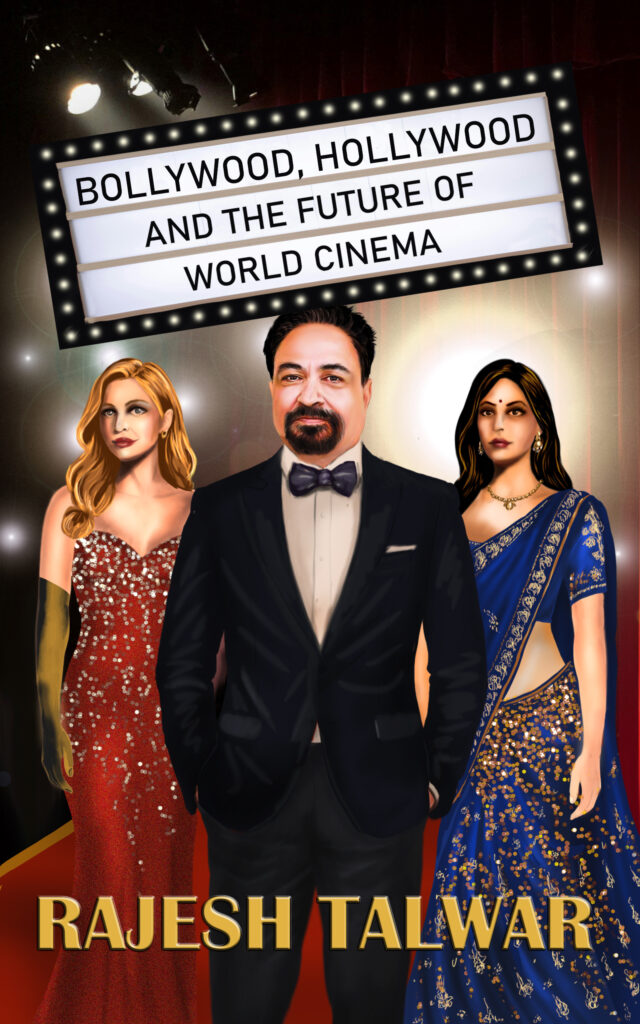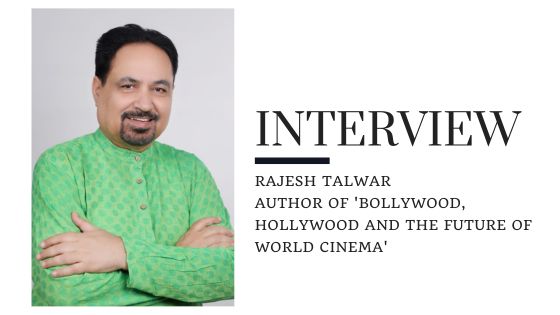
About Rajesh Talwar
Rajesh Talwar is an international award- winning author of 44 books, across multiple genres which includes plays, novels, children’s books, self-help books, and non-fiction works on social justice, law, culture and other subjects.
His plays cover everything from current events to historical retellings, and his novels cover everything from aesthetics to terrorism and the Indian legal system.
Among his non-fiction books on legal and political subjects are Courting Injustice: The Nirbhaya Case and its Aftermath (Hay House; 2013) and The Mahatma’s Manifesto: A Critique of Hind Swaraj (Om Books International; 2025).
The Bearded Prince and The Boy Who Wrote a Constitution (Ponytale Books; 2022) are two of his well-known children’s books.
Rajesh has worked for the United Nations in senior positions across three continents over a period of two decades and regularly contributes to both domestic and foreign publications. He has studied for shorter and longer durations at Nottingham, Harvard, Cambridge, Oxford and Delhi University.
Rajesh is currently producing and co-directing an AI generated animated feature film on toxic terror titled ‘Smoky Sky Songs.’
Fresh from being honoured as an Outstanding Achiever at the UK Parliament at the India/UK Achievers Awards 2026, and building on the Alumni Laureate Award from Nottingham in 2025, Rajesh Talwar now turns his lens to the global crossroads of film in his new book Bollywood, Hollywood and the Future of World Cinema.
LiFT: Tell us about your book, the journey of writing it, and its content.
Rajesh Talwar: There are four things I am addicted to: reading, writing, listening to music, and watching films. If I don’t do enough of these, I don’t feel good about myself. It’s true that I also have one large peg of some excellent whisky every night, but I wouldn’t call that an addiction! Since I have watched so many movies over the years—of all kinds—and continue to watch them every week, it made sense for me, as a writer, to pen my thoughts on cinema in a book. I have also done a course in film making from the London Film Academy so I do have some kind of practical grounding in the mechanics of film making. My discussions with my colleague Ananya Sharma with whom I am currently co-directing an animation film were also very useful.
LiFT: Why did you choose this title?
Rajesh Talwar: To an extent, I suppose I was inspired by one of my own titles published a couple of years ago. In that sense, it’s not particularly original, but since I was copying myself, I think this is forgivable. That book was titled Harvard, Oxford and Cambridge: The Past, Present and Future of Excellence in Education. It was based, in part, on my experiences at all three universities, where I was privileged to study for shorter and longer durations. If you read the book, you will realize that this new one too discusses the past of cinema, its present, and its future.
LiFT: Where do you see yourself ten years down the line in the world of literature?
Rajesh Talwar: That’s an interesting question and not an easy one to answer. The stature of a writer can change within months, and no one can predict how or when this will happen. For instance, the past twelve months have been special for me as an author because of two international awards that came my way. It all started in July 2025 when my alma mater, the University of Nottingham, announced that they intended to give me an Alumni Award for the social impact of my writing and my work with the United Nations over two decades across three continents.
It was a wonderful feeling to receive this award. What made it even more special was the jury’s mention and appreciation of some of the books I have written over the years. The citation highlighted Courting Injustice: The Nirbhaya Case and Its Aftermath and The Mahatma’s Manifesto. The jury also appreciated my work on raising awareness of caste-based discrimination through my book The Boy Who Wrote a Constitution and toxic terror or air pollution through my play The Killings in November.
Due to family constraints, I could not travel to Nottingham to receive the award, but the University graciously suggested that I accept it in New Delhi at a function held at the British Council in November 2025.
Then, in February 2026—barely a week ago—I received the UK–India Outstanding Achievers Award in the category of Society, Policy, and Law. What makes this award special is that it came through a joint initiative of NISAU UK, the British Council, and the UK Government. The ceremony was held over two days: first at the House of Lords in the British Parliament on 24 February 2026, and then two days later, on 26 February 2026, at a gala at the Connaught Rooms, Covent Garden, London. The room in the House of Lords led onto a terrace overlooking the River Thames, where I took some photographs. I also carried one of my books and shared a photo of it with friends, joking that one of my books had reached the British Parliament and now only forty-four were left to join it!
There is no doubt that these two international awards have raised my stature as a writer and public intellectual both nationally and internationally. Awards do such things—that is the nature of the beast. What happens in the coming years depends on whether I continue to write excellent books and, more importantly, whether these books resonate both domestically and internationally. No one can say with any degree of certainty what will happen, least of all myself. But I am hopeful.
LiFT: How important do you think marketing and the quality of a book are in promoting it and increasing its readership?
Rajesh Talwar: I believe this is hugely important. Many good books fall by the wayside simply because they lack proper marketing, while many others are overhyped thanks to excellent marketing campaigns. The truth is that quality alone is not enough—without visibility, even the finest work can remain unnoticed. At the same time, strong marketing can sometimes elevate books that may not truly deserve the attention they receive.
Another factor that cannot be underestimated is the title of a book. A powerful, memorable title can sometimes make or break a book, because it is often the first point of contact with a potential reader. In that sense, marketing, quality, and presentation all work together. A well-written book with a compelling title and effective promotion has the best chance of reaching a wide readership and leaving a lasting impact.
LiFT: What do you do apart from writing?
Rajesh Talwar: Apart from writing, I continue to consult and offer advice to the United Nations, an organization I have been associated with for over two decades across three continents. That work has shaped much of my worldview and continues to inspire the themes I explore in my books.
More recently, I have also turned to filmmaking as another way of telling stories with social relevance. Together with my extremely talented colleague Ananya Sharma, I co-directed Smoky Sky Songs, a film on toxic terror, a reference to the air pollution that plagues our towns and cities. We are currently busy with festival submissions, and I should add that it is an AI-generated animation film—something that reflects my interest in how technology can be harnessed for creative and socially conscious projects.
Two more films are already in the pipeline, including one on the Rani of Jhansi Regiment, a theme that is bound to resonate with audiences across the world.
LiFT: What activities do you resort to when you face writer’s block?
Rajesh Talwar: I don’t actually suffer from writer’s block in the conventional sense. What does happen, however, is that I sometimes get physically tired of typing. At those moments, I simply call it a day. Don’t want to get neck or back pain.
For me, writing is less about struggling to find inspiration and more about managing the rhythm of work. Even when I step away from the keyboard, I am still writing in my head—shaping ideas, refining arguments, and imagining new projects. For this reason I may reach fifty books within a year or so.
LiFT: What if your story were to be adapted into a movie? Who would you want to work as the director or actors in it?
Rajesh Talwar: Several of my novels could work well as films, especially those set in Afghanistan. But let me speak specifically about How to Kill a Billionaire, published by Juggernaut Books. The story revolves around the son of an NRI billionaire who goes missing. The principal suspect is a lawyer whose sister committed suicide shortly before the disappearance.
For the role of the billionaire, I would love to see Anupam Kher. He has the gravitas and emotional range to portray a character who is both powerful and deeply vulnerable in the face of personal tragedy. For the lawyer, I cannot think of anyone who could do greater justice to the role than Amitabh Bachchan. His ability to embody moral complexity and inner conflict would bring tremendous depth to the character.
As for the director, it would be a toss-up between Anurag Kashyap and Imtiaz Ali. Kashyap has a gift for gritty realism and could capture the darker, suspenseful aspects of the story, while Imtiaz Ali—who, incidentally, is a fellow alumnus of Hindu College—has a unique ability to explore human emotions and relationships with sensitivity. Either of them would bring a distinctive vision to the adaptation, making the film both powerful and memorable.
LiFT: Are you working on your next book? If so, could you tell us something about it?
Rajesh Talwar: Yes, I have two books scheduled for release this year. The first is Incredible Iconic Indians: The First Eleven, which should be out in a few months. What excites me most about this project is that it will be a bilingual edition, published simultaneously in English and Hindi. I feel this is important because it allows the book to reach a wider audience and ensures that readers who prefer Hindi can engage with it just as fully as those who read English. It’s also a way of celebrating India’s linguistic diversity while honouring the figures featured in the book.
Towards the end of the year, OM Books International may bring out How I Ate My Mother-in-Law. It’s a provocative title, deliberately chosen to spark curiosity and conversation. At this stage, I won’t reveal more about the content, but I can say that the book explores themes that challenge conventional thinking. For me, titles are not just labels—they are gateways into the world of the book, and sometimes they can make or break its reception.
LiFT: What are your suggestions for budding writers and poets to help them improve their writing skills?
Rajesh Talwar: a) Read as much as you can. Don’t only read good stuff, read the so-called trashy books as well.
b) Write every day, even it is only a paragraph. This creates a discipline.
c) Write about what you know.
d) Revise, revise and revise.
LiFT: With Indian and world cinema both being crucial points of focus of your new book, how would you describe the similarities and differences between the both? Do you think Indian cinema is at par with world cinema, as far as providing a commendable cinematic experience is concerned?
Rajesh Talwar: We are an emotional people, and that reflects in our acting—sometimes even in overacting. On the other hand, in Hollywood, as Shekhar Kapur observes, actors sometimes do not emote sufficiently. Our films also feature song-and-dance routines that often fail to appeal to overseas audiences. Neither do our overly formulaic films work. That said, many excellent films are being made in India, even if these may represent a smaller percentage of our total output. We produce so many films that all kinds of cinema can coexist, the bad, the terrible, the middling, the good and the excellent. To answer your question, some of our films are on par with the best in Hollywood. Let us not forget, as Mr. Amitabh Bachchan once pointed out, that we work with vastly smaller budgets.
LiFT: How do you think Indian cinema could strengthen its global position? What are the major points of concern for the industry to do the same?
Rajesh Talwar: There are many things we can and should do. The star system in India needs reform. Stars exist in all film industries across the world, even before the advent of cinema, but in our country, they are much too dominant, often at the expense of other professionals. We are willing to pay tens of crores to our stars, yet not enough to our storytellers, cinematographers, and other technicians. Our industry often treats extras and support staff shabbily. We need strong content. Stories are hugely important, as are dialogue and screenplay writers. We need to value our skilled technicians in all areas, including makeup artists. Equally vital is original content that connects to who we are as a people and as a multicultural civilization. This cut‑and‑paste approach that has continued for decades in Bollywood must end. There is no shortage of stories in the country, and we must draw upon both our rich heritage and contemporary writing to create films that truly resonate. There is dearth of courage, not material.
LiFT: When one speaks of Indian cinema, most people turn to Bollywood in no time, why do you think regional movie industries are unable to garner similar attention from audiences? What should be done for the latter to gain similar prominence?
Rajesh Talwar: This used to be the case, but it is no longer true, especially in respect of films coming from the southern part of our nation. In recent years, many films emerging from the South have been doing better business than those coming out of Bollywood. Take Pushpa: Part 1 and Pushpa: Part 2, or Kantara, for instance. Audiences in the north including the Hindi speaking belt are thirsty for good content and are tired of the formulaic plots that Bollywood continues to make films on. The way things have been going these past couple of years, Bollywood itself may increasingly be considered a regional industry. It is merely thriving on its past glory and urgently needs to raise its game. Yet Bollywood is down, but not out. Recently, the film Dhurandhar was widely appreciated in the South and other regions. It succeeded because of its strong content, realism, acting and direction. Yet instead of celebrating Bollywood’s return to the centre stage, many producers and directors have reacted nervously because they are addicted to formulas and the star system.
LiFT: Along with Indian cinema, Indian music too struggles to reach top positions in global charts, what factors do you believe lead to this, and how could the situation be improved?
Rajesh Talwar: There are many factors at play here. Language is one issue, but it does not fully explain the situation, as we can see from the visible global success of K‑pop. More importantly, audiences in the West often prefer a band or performer whose personality they admire — a complete package. For instance, Bob Dylan wrote the lyrics to his own songs, composed the music, and sang them himself. All aspects, were brilliant one might add, especially the lyrics that fetched him the Nobel Prize.
In India, by contrast, the process of making song and music is subdivided. Javed Akhtar or Gulzar might write wonderful lyrics, someone else like AR Rahman directs the music, and a third person, Arijit Singh or someone else, sings the song. In a way, our system is better because it allows each person to hone their craft and special expertise. Yet in the West, audiences connect not just with the song but with the personality of the performer, and they value the live performance aspect as well. There are ways to break this impasse. We need to be more flexible and experimental. Asha Bhosle is a true leader in this regard who has worked with many musicians from the West. Now, take Indian food, for example: it is a great cuisine, but some minor tweaks were needed before it started to appeal to foreigners, and now it enjoys global popularity. Similarly, we can and should make adjustments in our music and film industries. My book discusses this issue at length.
LiFT: What makes ‘Bollywood, Hollywood, and the Future of World Cinema’ a must-read for all?
Rajesh Talwar: I believe there is something in it for everyone. If you are a lover of Bollywood, you will find essays on Raj Kapoor, Sridevi and Amitabh Bachchan. If you are a fan of films made in the south, there are interesting write ups on Rajinikanth. If you are drawn to art cinema, you can read about how one of our greatest film directors, Satyajit Ray, might have achieved even greater heights. Fans of world cinema will discover writings on Chaplin, Kurosawa, and others. Those who enjoy K‑pop will find one of its icons discussed, while admirers of Indian playback singers will encounter thoughtful analysis of their contributions. If you are an investor in films, you will find lessons on how to invest wisely and increase earnings from overseas screenings. For readers concerned about fairness within the film industry, there are discussions on nepotism. Those who feel angry at the treatment of dancers, extras, supporting actors and sexual exploitation within the industry will find within the pages of this book an in‑depth analysis of the Justice Hema Committee Report. And so on.
Click here to order Rajesh Talwar’s Book – Bollywood, Hollywood and the Future of World Cinema