
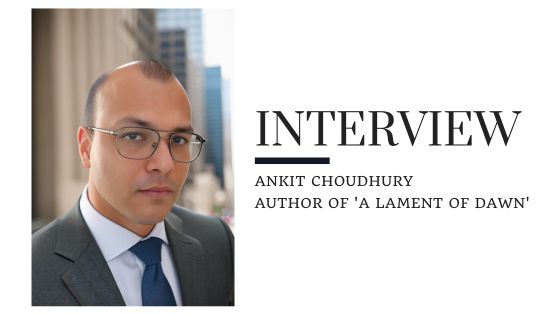
About Ankit Choudhury
Ankit writes at the fault line between myth and memory.
His work is driven by questions of identity, fracture, ambition, love, loss, and the uneasy truce between order and chaos that most people live with but rarely name. The characters in his stories are mirrors to be endured: minds under strain, hearts negotiating with purpose, intelligence colliding with longing. Power, in his writing, is never abstract. It is psychological, intimate, and costly.
Trained as a software architect, Ankit approaches storytelling the way he approaches systems: by dissecting how things fail, how they adapt, and what remains when structure collapses. He explores consciousness as a terrain, memory as architecture, love as destabilization, and meaning as something forged under pressure rather than discovered whole. The result is fiction that reads as myth on the surface and confession beneath it.
Ankit lives in Pune, India. He is an artist, reader, gamer, lifelong explorer of ideas; and a father, which, more than anything else, keeps him tethered to the human center of his work.
LiFT: Tell us about your book, the journey of writing it, and its content.
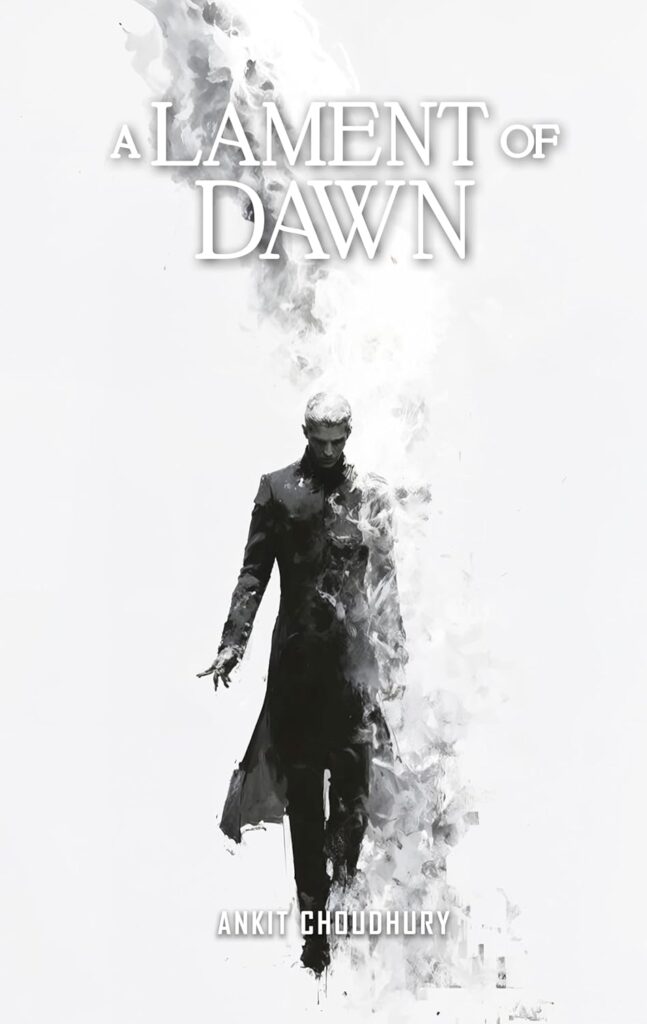
Ankit Choudhury: Lament of Dawn was the hardest book I’ve ever written because it asked me to end a story my own life hasn’t resolved yet.
By the time I reached Book 5, the world of A Ballad of Chaos was no longer something I was building. It was something I was trying to lay down. The earlier books carried momentum, rebellion, ambition, the belief that understanding or power might fix what was broken. This one begins when that belief fails.
The book moves between memory and the present, half in what has already happened and half in the consequences still unfolding. Writing the past chapters felt like reopening old wounds with better language. Writing the present chapters felt like watching decisions calcify into history while you’re still standing inside them.
What makes Lament of Dawn different isn’t style or scope, it’s honesty. I stopped trying to rescue the characters the way I sometimes wish I could rescue parts of my own life. I let them be tired. I let them be wrong. I let them want peace more than victory.
This book isn’t about fixing chaos. It’s about learning when to stop fighting it. Writing the ending didn’t give me answers, but it taught me how to sit with questions without needing them to resolve. And that, for me, was the real ending.
LiFT: Why did you choose this title?
Ankit Choudhury: The book was originally titled A Harbinger of Dawn and Order because I still believed the story was moving toward correction, that clarity, structure, or sacrifice would restore balance. But as the writing progressed, that belief stopped feeling honest.
What emerged instead was the consequence of love. Love didn’t save the world in this book. It delayed collapse, softened it, and then paid for it. The dawn that arrives isn’t ordered or clean; it’s quiet, heavy, and irreversible. That isn’t something you herald. It’s something you mourn.
A Lament of Dawn acknowledges that shift. The title marks the moment I stopped framing the ending as purpose or design, and accepted it as consequence, especially the cost of loving deeply in a world that can’t be fixed.
LiFT: When did you realize that you wanted to be a writer, and what was your inspiration behind it?
Ankit Choudhury: I didn’t realize I wanted to be a writer in the traditional sense. I realized I needed language to survive things I couldn’t otherwise process. Writing started as a private act, closer to journaling than art, a way to give shape to emotions that didn’t resolve cleanly.
Poetry came first because it allowed compression. I didn’t need explanations, just accuracy. Over time, those fragments began turning into myth, characters, and worlds; not because I wanted to escape reality, but because reality needed a larger container.
I didn’t write because I was inspired by books or authors. I wrote because silence stopped being an option. Writing became the place where pain could be examined without being minimized, and where meaning could exist even when answers didn’t.
LiFT: Where do you see yourself ten years down the line in the world of literature?
Ankit Choudhury: I feel like I’ve written through most of the experiences that shaped me. In many ways, this series was an act of exhaustion, not burnout, but completion. I put on the page what I needed to survive, and that chapter of my life feels spoken.
If new experiences come, they’ll find their place on the page naturally. And if something I’ve forgotten resurfaces, a memory, a feeling, a question I thought I’d outgrown, I trust it will ask to be written in its own way. I don’t force material anymore. I’ll write when there’s something honest to say, and stay silent when there isn’t. That feels like the right relationship with literature for me.
LiFT: How important do you think marketing and the quality of a book are in promoting it and increasing its readership?
Ankit Choudhury: I think of marketing as discoverability engineering. It’s about reducing friction between the work and the reader it’s meant for, not inflating claims. Quality ensures retention; marketing ensures entry. Long-term readership only grows when both are designed to work together, not when one tries to compensate for the other.
LiFT: What message do you want to convey to people through your writing?
Ankit Choudhury: I’m not trying to deliver a message in the traditional sense. If anything, I want to create a space where people are allowed to sit with questions they usually rush past, grief, love, ambition, the need for control.
As Martin once put it, chaos isn’t a pit, it’s a ladder. But ladders don’t always lead upward. Sometimes they just reveal where you’re standing. In my writing, chaos isn’t something to escape; it’s something to understand. It’s often the only honest terrain left when certainty collapses.
I hope readers come away feeling less alone in their uncertainty, not reassured, but recognized. That recognition matters more to me than agreement.
LiFT: What do you do apart from writing?
Ankit Choudhury: Writing isn’t my whole life, it’s how I make sense of it. Outside of that, I work in technology, building systems where precision and consequence matter. That discipline keeps me grounded.
I sketch and work with visual art when I need to think without words. I read constantly, especially comics and graphic novels, because they understand economy better than most prose. A single panel can carry what a page sometimes can’t. I also game, which for me isn’t escapism so much as immersion: systems, choices, failure loops. It’s another way of understanding consequence.
And I’m a parent, which quietly reframes everything. All of these worlds feed the writing, even when I’m not aware of it. I don’t chase inspiration anymore. I pay attention, and let it arrive when it needs to.
LiFT: What activities do you resort to when you face writer’s block?
Ankit Choudhury: I don’t really treat writer’s block as a problem to fight. Most of the time, it’s a signal, either I’ve said what I needed to say, or I’m trying to force language before the experience is ready.
When that happens, I step away from writing and move into other forms of attention. I usually experiment with tech.
LiFT: What if your story were to be adapted into a movie? Who would you want to work as the director or actors in it?
Ankit Choudhury: Zack Snyder. Whatever he says, goes.
LiFT: Are you working on your next book? If so, could you tell us something about it?
Ankit Choudhury: No, I’m not working on the next book.
A Lament of Dawn brought me face to face with a decades-old betrayal. Writing the book didn’t heal that wound, but it changed my relationship with it. I stopped trying to demand justice from it. I let it exist as part of the landscape that shaped me.
Writing the ending took more out of me than I expected, and I think it deserves space to settle.
LiFT: What are your suggestions for budding writers and poets to help them improve their writing skills?
Ankit Choudhury: Pay attention to everything. When someone speaks to you, notice their eyes, their hair, the tension in their face, how their hands move, how they breathe between sentences. When you walk down a street, notice the road, the trees, the banners, which way the wind is moving, what the air smells like, how many people are around you, their ages, their clothes, their pace.
When you sit in a room, notice the silence; what kind it is, who owns it, and who’s uncomfortable inside it.
Then, write about one thing. Make the entire moment exist for that single detail. Let all the other information serve it quietly, the way gravity serves a planet. Most writing fails not because it lacks detail, but because it refuses to choose. Precision comes from devotion, not accumulation.
Click here to order Ankit Choudhury’s Book – A Lament of Dawn
One thought on “In Conversation with Ankit Choudhury”
Your passion for writing and clarity of expression really stood out. Best wishes for your journey ahead