About Divya Narain Upadhyaya
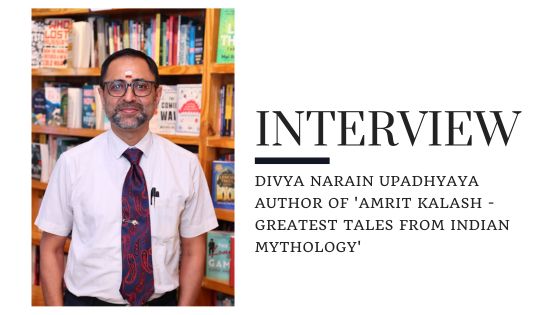
Divya Narain Upadhyaya is a Professor of Plastic Surgery at the Department of Plastic and Reconstructive Surgery, King George’s Medical University, Lucknow, with over two and a half decades of experience in medicine. His areas of interest in medicine include cleft and craniomaxillofacial surgery, trauma care, and the treatment of brachial plexus injuries. He is a fellow of the American College of Surgeons (FACS) and has trained extensively in craniofacial and maxillofacial surgery in the United States and Switzerland. He is an International Craniofacial Scholar of the Plastic Surgery Foundation of the American Society of Plastic Surgeons and American Society of Maxillofacial Surgeons. He is also an AO-CMF Fellow from the University of Basel, Switzerland.
Dr Upadhyaya volunteers his time for cleft missions in India, as well as across the world for various cleft charities like Smile Train, and Operation Smile. He also teaches life support courses like Basic Life Support (BLS), Advanced Cardiac Life Support (ACLS), and Advanced Trauma Life Support (ATLS) throughout India. He is actively involved with routine patient care of burn, and trauma victims besides helping train young plastic surgeons at the college. He serves on Editorial board positions of several national, and international Plastic Surgery journals like the Indian Journal of Plastic Surgery (IJPS), Journal of Cleft Lip Palate and Craniofacial Anomalies, Indian Journal of Burns (JCLPCA), Indian Journal of Burns (IJB), and FACE (official journal of American Society of Maxillofacial Surgeons). He is a member of the Institutional Ethical committee of his university, and also shoulders the responsibility of looking after the Central Library and the Center for Advance Skill Development of his University. His primary literary interests lie in Indian scriptures, Indic religions, and Indian history. He blogs on https://dnu1blog.com about a variety of topics. His first book, ‘The Battle of Panchavati and Other Stories from Indian Scriptures’, was an Amazon Bestseller and earned peer appreciation from readers of all age groups. His second book, ‘Daffodils: A Bouquet of Short Stories’, was published as a Kindle e-book during the lockdown and is a collection of his blog posts on various topics. His third book, ‘Amrit Kalash: The greatest stories from Indian Mythology’, has been published by Rupa Publishers and is available on e-commerce platforms and in bookstores. ‘Finding Shankara – A dramatised biography of Adi Shankaracharya’ is his fourth book and has been published by Fingerprint Publishers. The book traces the life and journey of the 8th-century saint Adi Shankaracharya and has been examined and approved by the office of the current Jagadguru Shankaracharya of the Sringeri Sharada Peetham.
Dr Upadhyaya is often invited to seminars and symposia where he talks to young students and doctors about Indic religions, mythology, and their relevance in contemporary India.
LiFT: Tell us about your book, the journey of writing it, and its content.
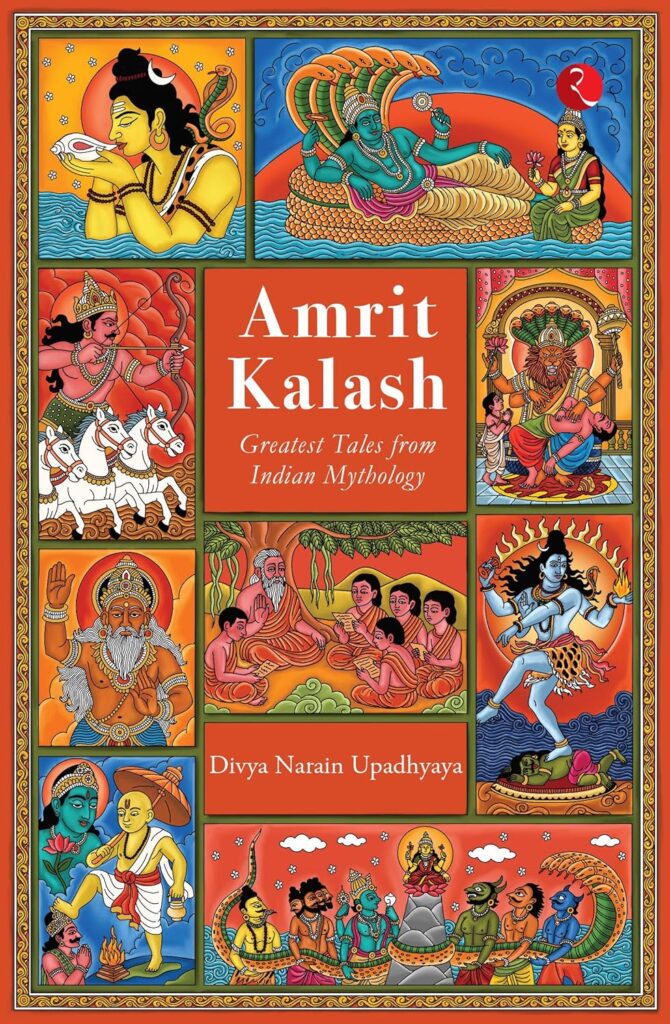
Divya Narain Upadhyaya: Amrit Kalash is a collection of stories from Indian mythology.
The book consists of seven immortal stories from different Indian epics/legends. The stories have been fictionalized to make them interesting without taking away the real spirit or message of these parts of Indian legends. The text is interspersed with several footnotes all over the book, and ‘Author’s Notes’ at some places to clarify difficult terms, concepts, and to provide the readers with interesting pieces of information which may make the reading more enjoyable, and a great learning experience too. The stories themselves have been written to be the right mix of fiction and myth and draw upon not only the actual text of the epics/legends, but also the author’s impression/understanding of these.
The book is organized into three sections – Prathamah: Section One, Dwitiyah: Section Two, and Tritiyah: Section Three.
Each section has stories drawn from a single source, or similar sources, and are related to each other or based upon a theme.
Section one has two stories from the Mahabharata, and section two describes two dances of Shiva inspired by the Shiva Purana.
Section three is the largest section of the book and describes some of the most famous stories of Indian mythology like the stories of Hiranyakashyap and Prahlad, the churning of the ocean, Vamana and Vali etc.
LiFT: Why did you choose this title?
Divya Narain Upadhyaya: The title Amrit Kalash mean a pot of nectar which is what the collection of stories in this book embodies. Amrit Kalash is also one of the stories that appear in this book where I have described the legend of the churning of the ocean by the gods and demons and the resultant emegence of the pot of nectar from the ocean.
LiFT: When did you realize that you wanted to be a writer, and what was your inspiration behind it?
Divya Narain Upadhyaya: I have spent around three decades in the practice of medicine (and now in teaching). I started writing late, as a hobby, when I began my blog, which was very well received and inspired me to take writing seriously. My first book, The Battle of Panchavati, was a collection of short stories and an Amazon bestseller from the moment it was released. I have never looked back since then. Although plastic surgery and my academic life still take up most of my time, I do find time to work on my passion for writing books.
LiFT: Where do you see yourself ten years down the line in the world of literature?
Divya Narain Upadhyaya: I want to write books that will reintroduce the world of Indic thought and Indic literature to the modern English-speaking reader.
I hope I shall be able to achieve this dream in the next ten years, and leave a lasting impact on Indian and International readership.
LiFT: How important do you think marketing and the quality of a book are in promoting it and increasing its readership?
Divya Narain Upadhyaya: Marketing and the quality of book production play as important a role as the book’s content in its promotion and success.
Marketing alone cannot ensure success, but coupled with good content, and excellent print quality it can propel a book to great heights.
LiFT: What message do you want to convey to people through your writing?
Divya Narain Upadhyaya: The focus of my writing is mainly on Indian mythology, and I hope to be able to lure the modern English-speaking reader to this goldmine and rekindle their interest in Indic literature and Indic thought.
LiFT: What do you do apart from writing?
Divya Narain Upadhyaya: I am a Plastic surgeon and a Professor at the Department of Plastic Surgery at King George’s Medical University (KGMU), Lucknow. KGMU is one of the oldest medical institutions in the country, and the department of Plastic and reconstructive surgery here is among the oldest Plastic Surgery departments in India. We have been training surgeons in the art of Plastic Surgery since 1971. Besides routine patient care, and teaching and training of residents at KGMU, I also shoulder several other administrative responsibilities at KGMU.
LiFT: What activities do you resort to when you face writer’s block?
Divya Narain Upadhyaya: When faced with writer’s block (and believe me they are very frequent), I spend a lot of time reading light literature, watching movies and listening to music. Travelling is another way for me to relax and helps me find the inspiration to start writing again.
LiFT: What if your story were to be adapted into a movie? Who would you want to work as the director or actors in it?
Divya Narain Upadhyaya: It would be great to see the stories of ‘Amrit Kalash’ on the big screen. But since I have little knowledge about the field of movie-making and direction, I am not sure who I would trust the script with.
LiFT: Are you working on your next book? If so, could you tell us something about it?
Divya Narain Upadhyaya: The next book is already in the pipeline. It is a handbook for teaching life-saving skills (CPR) for the common man. Part of my work at the university also includes teaching life-saving skills to medical graduates. It is my firm belief that basic life support skills should be taught to everyone, even lay persons, and especially to those in positions of authority like school teachers, policemen, firemen, bus drivers etc. This book is an attempt to do that.
LiFT: What are your suggestions for budding writers and poets to help them improve their writing skills?
Divya Narain Upadhyaya: Two things are very important for writers to produce good work. One – find a genre that your are passionate about, which you want to read and write about. And second, find your source of inspiration which will help you put your thoughts into words. This source of inspiration can be anything – music, movies, travelling, a beloved, reading, bird watching etc. Once you have found these, your are well on your path to becoming a writer.