About Dixita Hazarika
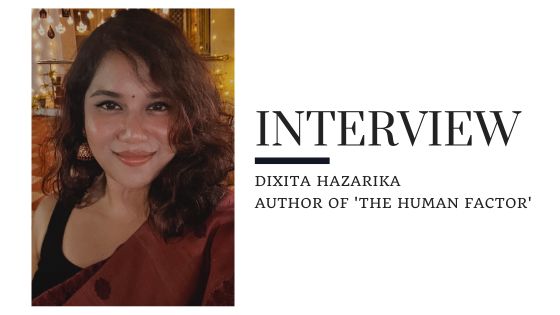
Dixita Hazarika is a distinguished writer and proofreader from Assam, India, whose work focuses on cultural preservation, poetic expression, and psychological insight. Her debut poetry collection, Cuts and Stitches (2019), marked her arrival as a powerful poetic voice, exploring themes of emotional resilience, memory, and healing. Since then, she has authored several books and anthologies that reflect her versatility and depth: A Gentle Reminder, Pamphlets, Comeback, The Unknown Truth, Thesaurus Verborum, The Lost Reality.
Her acclaimed translation of Jyoti Prasad Agarwala’s poetry earned her the Best Writer Award in 2022. She ventured into screenwriting with Jokhin (2023). Her writing spans journals and magazines, and she recently completed her role as editor for the coffee table book titled Kaziranga – The Cradle of Biodiversity, published in February 2024.
Outside her professional life, Dixita Hazarika enjoys cooking, traveling, and spending quality time with friends and family. These experiences often inspire her writing and deepen her connection to diverse cultures and everyday human experiences.
LiFT: Tell us about your book, the journey of writing it, and its content.
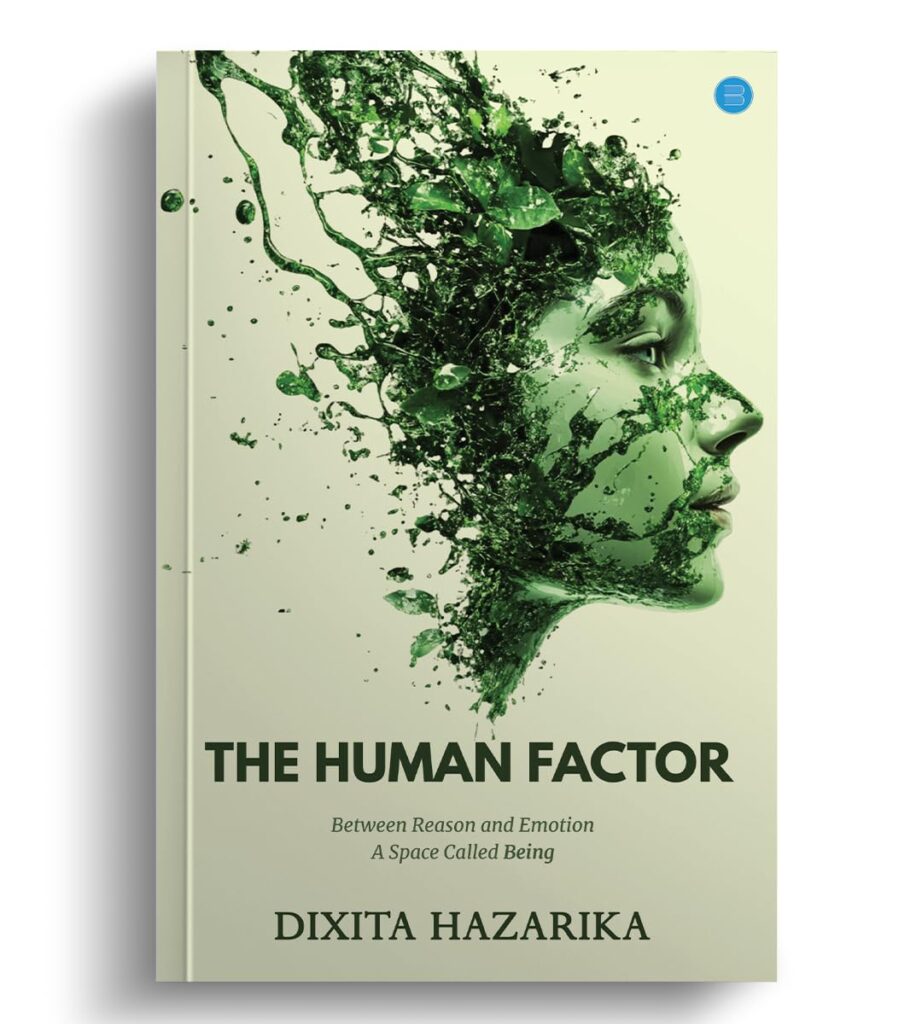
Dixita Hazarika: I wrote The Human Factor to understand myself and life better. Sometimes we go through so many emotions but don’t know why we feel that way. Writing this book helped me see those feelings clearly and make peace with them. It was a healing process for me, and I wanted others to feel that too. The main message of my book is simple- you don’t have to be perfect to be at peace. Life will always have ups and downs, but when we understand our mind and emotions, we can handle them better. It’s about accepting ourselves, not blaming ourselves.
My writing journey was meaningful and beautiful. Sometimes it was hard for me to put my feelings into words, but slowly, it became easier. The most difficult part was being honest! Some things were very deep to write but I kept writing because I knew someone out there needed to read it. Some parts are inspired by what I have seen and felt around me.
This book is slightly unique because I didn’t write it like a theory book. I wrote it in simple stories and reflections so anyone can relate. It shows how our childhood, teenage years and adulthood shape who we become. It helps readers see that they are not weak- they are human.
The book doesn’t have a fixed age group. Teenagers, young adults and older readers can relate to the struggles of growing up and connect to the emotional truth of the stories. I wrote slowly. I didn’t rush, because I wanted every part to feel real.
LiFT: Why did you choose this title?
Dixita Hazarika: I have chosen the title The Human Factor because everything in life comes down to one thing- being human. I wanted the title to remind people that our feelings are not weaknesses; they are what make us human.
LiFT: When did you realize that you wanted to be a writer, and what was your inspiration behind it?
Dixita Hazarika: From a very young age, I never had any other wish than to be a writer. Even during my school days, writing felt natural to me- I used to write poems, often as a way of expressing thoughts and emotions I couldn’t say aloud. As time went on, my curiosity grew, and I slowly began reading more books, discovering different voices, styles, and worlds through literature.
Choosing English Literature for both my bachelor’s and master’s degrees felt like a natural extension of that early love. Studying literature allowed me to go deeper into the craft of writing, to understand language, storytelling, and the power of words more intimately. Over the years, this journey strengthened my passion and shaped my identity as a writer, and it eventually led me to dream of creating and publishing my own books one day.
LiFT: Where do you see yourself ten years down the line in the world of literature?
Dixita Hazarika: Ten years down the line, I see myself as a well-established writer with my own body of published work. I hope to have written books that reflect my voice, experiences, and literary sensibilities, and that resonate deeply with readers. I envision myself continuing to grow in this field- experimenting with different forms of writing, refining my craft, and contributing meaningfully to literature.
Beyond publishing, I see myself being actively engaged with the literary community, whether through teaching, mentoring, or participating in literary conversations and platforms. Most importantly, I hope to remain deeply connected to writing, not just as a profession, but as a lifelong passion that continues to evolve with time.
LiFT: How important do you think marketing and the quality of a book are in promoting it and increasing its readership?
Dixita Hazarika: Both marketing and the quality of a book are extremely important, and neither can truly succeed without the other. The quality of a book is the foundation- it is what earns a writer credibility, builds trust with readers, and ensures that the work has lasting value. A well-written, thoughtful book creates genuine connections, encourages word-of-mouth recommendations, and helps an author grow a loyal readership over time.
However, even the best book can go unnoticed without effective marketing. Marketing helps the book reach its audience, creates visibility in a crowded literary space, and introduces the author’s work to readers who might otherwise never discover it. In today’s publishing world, marketing plays a crucial role in bridging the gap between a quality book and its readers.
In essence, quality gives a book its soul, while marketing gives it a voice. When both work together, a book has the best chance to be read, appreciated, and remembered.
LiFT: What message do you want to convey to people through your writing?
Dixita Hazarika: I hope The Human Factor feels like a friend to you. It’s for anyone who wants to understand their own mind and find some peace. It will feel like someone sitting beside you, not teaching you.
If reading this book makes even one person feel less alone, then I will be happy!
LiFT: What do you do apart from writing?
Dixita Hazarika: Apart from writing, I manage multiple responsibilities as a naval wife. Since my husband often has to stay on duty for long hours, a large part of my time goes into taking care of the home and handling everyday responsibilities independently. This role has taught me patience, resilience, and adaptability, all of which quietly influence my writing as well.
In my free hours, I read extensively, as reading not only relaxes me but also helps me grow as a writer. I also constantly experiment with my writing- trying out new styles, themes, and forms which keeps the creative process alive and evolving for me.
LiFT: What activities do you resort to when you face writer’s block?
Dixita Hazarika: I don’t stress myself when I face writer’s block. Instead of forcing words onto the page, I allow myself to step back and accept it as a natural part of the creative process. I consciously take breaks from monotony, knowing that creativity often returns when the mind is given space to breathe.
Traveling plays a big role in helping me overcome writer’s block. New places, people, and experiences constantly refresh my perspective and inspire fresh thoughts. This change of environment helps me regain motivation naturally, and when I return to writing, the words tend to flow more freely and honestly.
LiFT: Are you working on your next book? If so, could you tell us something about it?
Dixita Hazarika: I would love to continue writing about human emotions and personal growth. Writing helps me express what I observe and feel in life.
LiFT: What are your suggestions for budding writers and poets to help them improve their writing skills?
Dixita Hazarika: For budding writers, the most important advice is to be patient, consistent, and original. Writing is a journey that takes time, and it’s essential not to compare your path with others. Write regularly, even if it’s only a few lines each day, and don’t be afraid of making mistakes- every attempt helps you grow.
Read widely, but don’t try to copy what you read. Reading should inspire you, not overshadow your own voice. Stay true to your thoughts and experiences, as originality is what makes writing meaningful and powerful. Observe life closely, experiment with your style, and trust your perspective. Above all, believe in your voice and remain honest in your writing- authenticity and persistence are what truly set a writer apart.
Click here to order Dixita Hazarika’s Book – The Human Factor